
The internet has become an essential part of modern life. People use it to communicate with friends, access educational resources, shop for products, manage bank accounts, run businesses, and share information with others. Although these activities make everyday life more convenient, they also involve sharing personal information with websites, applications, and online platforms.
This raises an important question: Why do we need privacy online?
Online privacy is important because it helps protect our personal information, reduces the risk of identity theft, supports freedom of expression, and gives us greater control over our digital lives. Without proper privacy protection, information such as our location, financial details, photographs, private messages, and browsing habits may be exposed or misused.
Many people believe online privacy matters only to those who have something to hide. However, privacy is a basic part of personal safety and independence. Everyone deserves reasonable control over their personal information, whether they use the internet for education, entertainment, communication, or business.
In this article, we will explain why online privacy matters, what can happen when it is ignored, and how you can protect your information while using the internet.
What Is Online Privacy?
Online privacy refers to the ability to control how your personal information is collected, stored, used, and shared when you use the internet.
Personal information includes your name, email address, telephone number, photographs, location, financial records, browsing history, and private conversations. Some information can identify you directly, while other details can reveal your habits, interests, relationships, or daily activities.
For example, when you create a social media account, you may provide your name, birthday, photographs, and contact details. The platform may also collect information about the posts you view, the content you like, and the advertisements you interact with.
Online privacy helps you understand what information you are sharing, who may access it, and how it could be used.
It does not mean avoiding the internet completely. Instead, it means making informed decisions about what you share and taking reasonable steps to prevent unnecessary exposure of your personal information.
1. Online Privacy Protects Personal Information
One of the main reasons we need privacy online is to protect personal information from unnecessary exposure.
People share information online every day, sometimes without considering the possible consequences. A photograph may reveal where someone lives, a social media post may disclose their workplace, and a public profile may expose their contact details.
Once information becomes publicly available, other people may copy, save, or redistribute it without the original user’s permission.
For example, someone who regularly posts photographs of their home, travel plans, and daily routine could unintentionally reveal information that might be misused.
Protecting online privacy means thinking carefully before sharing personal details and limiting access to information that does not need to be public.
By controlling what you share, you can reduce the risk of personal information reaching people who may use it irresponsibly.
2. It Helps Prevent Identity Theft
Identity theft occurs when someone uses another person’s personal information without permission, often to commit fraud or impersonate that individual.
Criminals may attempt to obtain passwords, email addresses, identification details, or financial information through phishing messages, fake websites, malicious software, and other deceptive methods.
If they obtain enough information, they may try to access online accounts, impersonate the victim, or carry out fraudulent transactions.
Online privacy helps reduce these risks by limiting the amount of personal information criminals can easily find.
For example, sharing identification documents publicly or using the same password for multiple accounts can create unnecessary opportunities for misuse.
You can reduce these risks by using strong, unique passwords, enabling multifactor authentication, avoiding suspicious links, and sharing sensitive information only through trusted channels.
Although privacy measures cannot prevent every attack, they can make it more difficult for criminals to obtain and misuse your information.
3. Privacy Protects Financial Information
Online banking, digital payments, and online shopping have made financial activities easier and faster. However, these services also require users to protect their financial information.
Bank account credentials, payment card details, transaction records, and financial documents can be valuable targets for criminals.
If this information is exposed, victims may face fraudulent transactions, account compromise, or attempts to steal money.
For example, a criminal may send a message pretending to be from a bank and ask the recipient to confirm their account details through a fake website. Someone who enters their information may unknowingly give it to the attacker.
Online privacy encourages people to handle financial information carefully and use trustworthy services.
To protect yourself, avoid clicking suspicious banking links, secure your devices, use official banking applications, and never disclose your PIN or one-time password to someone who contacts you unexpectedly.
Protecting financial privacy helps reduce avoidable risks when managing money online.
4. It Gives You Control Over Your Personal Data
Another important reason we need privacy online is that it gives us greater control over personal information.
Websites and applications may collect data to provide services, improve performance, personalise content, or deliver advertisements. Some data collection is necessary, but other information may not be essential for the service being used.
For example, a navigation application may need access to your location to provide directions. A basic calculator application usually does not need continuous access to your contacts or microphone.
Reviewing application permissions allows you to decide which services can access different types of information.
You can also adjust privacy settings, manage advertising preferences, and remove unnecessary information from accounts where appropriate.
Having greater control over personal data helps people use technology according to their needs rather than automatically accepting every request for information.
5. Online Privacy Supports Freedom of Expression
Privacy helps people express themselves, explore ideas, and seek information without unnecessary fear that their personal activities will be exposed.
People use the internet to discuss social issues, research unfamiliar topics, ask questions, and seek advice about personal problems.
When people believe their private activities may be monitored or misused, they may become reluctant to express their opinions or search for sensitive information.
For example, someone researching a family problem or seeking support for a personal challenge may prefer to keep those activities private.
Reasonable privacy protections create space for people to learn, think, communicate, and explore different viewpoints.
Privacy does not mean that harmful behaviour should be free from accountability. Rather, it recognises that people need appropriate protection against unnecessary exposure and intrusion.
6. It Reduces Unwanted Online Tracking
Many websites and applications use cookies, advertising identifiers, and analytics tools to understand user behaviour.
These technologies can help websites remember preferences, measure performance, and provide relevant recommendations. However, extensive tracking may allow organisations to build detailed profiles of people’s interests and activities.
For example, after searching for a product online, you may begin seeing advertisements for similar products on other websites.
Some users appreciate personalised recommendations, while others prefer to limit the information collected about their browsing habits.
Online privacy gives users ways to manage some forms of tracking through browser settings, cookie controls, and advertising preferences.
Although these measures cannot eliminate every form of tracking, they can help reduce unnecessary data collection and provide greater control over the browsing experience.
7. Privacy Protects Your Reputation
Information shared online can remain accessible for a long time. Photographs, videos, comments, and messages may be copied or redistributed even after the original content is deleted.
This can affect someone’s personal relationships, educational opportunities, or professional reputation.
For example, an old public post may be viewed by a potential employer, or a private photograph may be shared without the person’s permission.
Online privacy encourages people to think carefully before publishing information and to control who can access their content.
Review your social media profiles, remove unnecessary public details, and use appropriate audience settings.
These habits can help reduce unwanted exposure and protect your reputation as your personal and professional life changes.
8. It Helps Protect Children and Young People
Children and teenagers increasingly use social media, online games, messaging applications, and educational platforms.
Although these services can support learning and communication, young users may not fully understand the consequences of sharing personal information.
Posting a school name, home address, live location, or daily routine can create unnecessary safety risks.
Privacy helps parents and guardians make informed decisions about what information children share and who can access it.
Families can teach young people to use private account settings, avoid sharing sensitive details, recognise suspicious messages, and ask trusted adults for help when something online makes them uncomfortable.
Teaching privacy habits early helps children become more responsible internet users.
9. Online Privacy Builds Trust
Trust is essential for people who use websites, applications, and online businesses.
Users are more likely to feel comfortable using a service when they understand how their information is handled and believe reasonable safeguards are in place.
For example, an online store that clearly explains its data practices and protects customer records gives customers more reason to trust it.
In contrast, a company that mishandles personal information may lose customers and damage its reputation.
Privacy therefore benefits individuals and organisations alike.
Businesses should explain what information they collect, use appropriate security measures, limit unnecessary data collection, and provide meaningful privacy controls.
When organisations respect privacy, people can use their services with greater confidence.
10. It Helps Reduce the Risk of Data Misuse
Personal information can sometimes be used for purposes beyond what a person originally expected.
For example, information collected by a digital service may be used to personalise advertising, predict interests, or create customer profiles. Depending on the service and applicable rules, some information may also be shared with other organisations.
Data can create problems when it is inaccurate, handled irresponsibly, or used without appropriate safeguards.
Online privacy encourages people to understand how their information is collected and used. It also encourages organisations to avoid collecting information they do not need and to explain their practices clearly.
By limiting unnecessary data sharing, individuals can reduce the amount of information available for potential misuse.
11. Online Privacy Supports Better Cybersecurity
Online privacy and cybersecurity are closely related, but they are not exactly the same.
Cybersecurity focuses on protecting devices, accounts, networks, and information against unauthorised access, attacks, and damage. Privacy focuses on how personal information is collected, used, shared, and controlled.
Good privacy habits can improve digital safety by reducing the information available to potential attackers.
For example, limiting publicly visible personal details may make it harder for criminals to create convincing phishing messages. Using unique passwords and multifactor authentication can also reduce the risk of account compromise.
Keeping software updated, avoiding suspicious downloads, and using trusted online services are additional ways to protect yourself.
Together, these practices help create a safer digital environment.
12. It Makes Online Communication More Private
People use the internet to communicate with friends, family members, colleagues, and business partners.
Privacy helps protect personal conversations and reduces the risk of information reaching unintended audiences.
For example, someone may use a messaging application to discuss family matters or share confidential work information. Appropriate account security and privacy settings can help reduce the likelihood of unauthorised access.
However, the level of protection depends on the application’s design, encryption, device security, and account settings. A recipient may also copy or share a message.
Choose communication tools carefully and think about the sensitivity of the information you send.
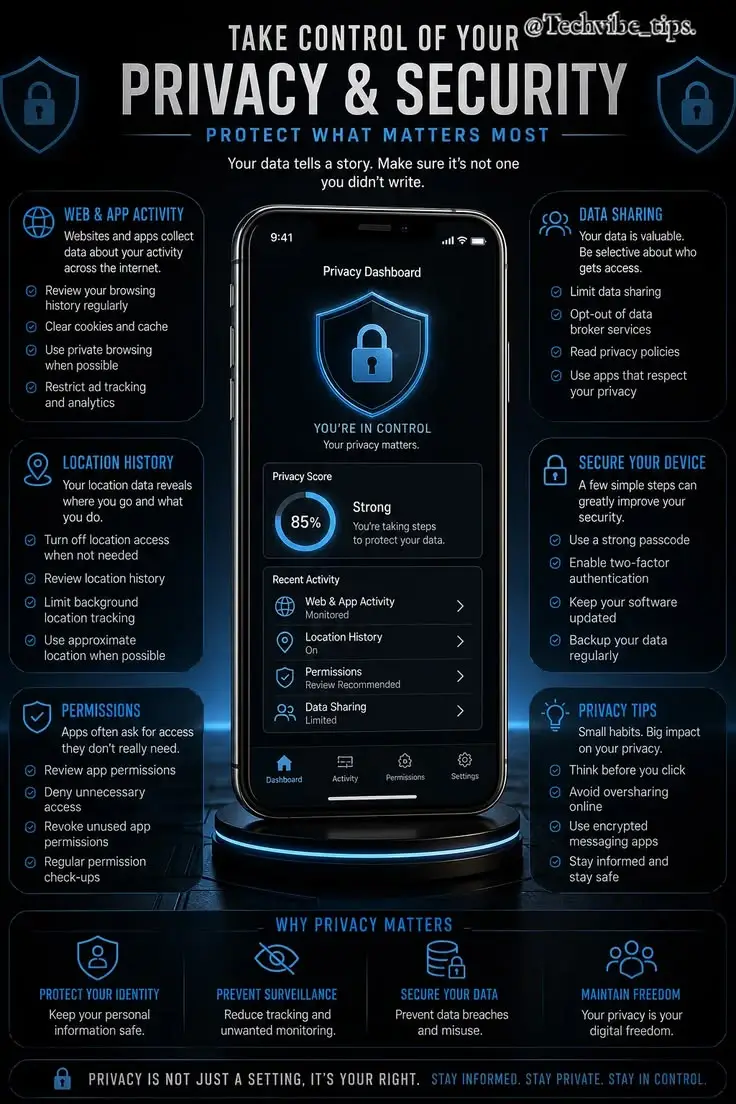
How Can You Protect Your Privacy Online?
Understanding why privacy matters is only the first step. You also need practical habits to protect your information.
Here are eight useful measures:
- Use strong, unique passwords: Avoid using the same password for multiple accounts. Consider a reputable password manager.
- Enable multifactor authentication: Add another verification step to important accounts whenever possible.
- Review application permissions: Restrict unnecessary access to your camera, microphone, contacts, and location.
- Limit social media sharing: Avoid publicly posting financial details, identification documents, passwords, or sensitive personal information.
- Recognise phishing attempts: Be cautious with unexpected messages asking you to click links or disclose confidential details.
- Keep devices updated: Install software updates from official sources to receive important security fixes.
- Choose trustworthy websites: Check a service’s reputation, privacy practices, and security features before sharing sensitive information.
- Review privacy settings: Check who can view your profile, posts, photographs, and shared files.
No single action guarantees complete privacy. However, combining these practices can reduce unnecessary exposure and give you greater control over your digital life.
Frequently Asked Questions (FAQs)
1. Why do we need privacy online?
We need privacy online to protect personal information, reduce identity theft and fraud risks, control how data is used, protect our reputations, and communicate with greater confidence.
2. What happens if we do not protect our online privacy?
Without appropriate privacy practices, personal information may be exposed, accounts may be compromised, and individuals may face identity theft, scams, unwanted tracking, or reputational damage.
3. Is online privacy important for students?
Yes. Online privacy helps students protect their personal details, avoid scams, maintain safer social media accounts, and use educational platforms more responsibly.
4. Can a VPN protect my online privacy?
A VPN encrypts traffic between your device and the VPN server and generally masks your original public IP address from websites. However, it does not prevent every type of tracking or guarantee complete anonymity.
5. How can I protect my privacy on social media?
Use appropriate audience settings, avoid sharing sensitive information publicly, review application permissions, and be careful about accepting unknown connection requests.
6. Who is responsible for protecting online privacy?
Individuals, businesses, technology providers, and governments all have responsibilities. Individuals should make informed choices, while organisations should handle personal information responsibly and follow applicable privacy laws.
Conclusion
We need privacy online because personal information is valuable and can affect our security, finances, reputation, relationships, and freedom.
As more everyday activities move to digital platforms, protecting personal information becomes increasingly important. Online privacy helps reduce identity theft risks, prevent unwanted exposure, limit unnecessary tracking, and give people greater control over their digital lives.
Privacy also supports trust between users and businesses, protects children, and encourages responsible use of technology.
Although complete privacy cannot be guaranteed, everyone can take practical steps to improve their protection. Using strong passwords, enabling multifactor authentication, reviewing application permissions, and thinking carefully before sharing information are simple but valuable habits.
Ultimately, online privacy is not about hiding wrongdoing; it is about protecting personal information, maintaining control over your digital identity, and using the internet safely and confidently.
SEO Elements
SEO Title: Why Do We Need Privacy Online? 12 Important Reasons
Meta Description: Discover why online privacy matters, how it protects personal information, finances, and identity, and practical ways to stay safer on the internet.
Focus Keyword: Why do we need privacy online?
Related Keywords:
- Importance of online privacy
- Reasons to protect online privacy
- Benefits of internet privacy
- How to protect personal information online
- Online privacy and security
- Digital privacy protection
- Personal data protection
Suggested URL Slug: why-do-we-need-privacy-online