
Introduction
The internet has become an important part of modern life. People use it to communicate, shop, study, work, manage their finances, and access entertainment. While these activities make life easier, they also involve sharing personal information with websites, applications, businesses, and online platforms.
Every time someone creates an account, searches for information, makes an online payment, or posts on social media, they may leave behind digital information. If this information is not properly protected, it can be exposed, misused, or accessed by people without permission.
This is why online privacy is so important. It gives individuals greater control over their personal information and helps them use digital services more confidently.
But what are the benefits of having online privacy? From protecting your identity to reducing unwanted tracking, online privacy offers several advantages that can improve your safety, freedom, and digital experience.
What Is Online Privacy?
Online privacy refers to the ability to control how personal information is collected, stored, used, and shared on the internet.
This information may include your name, phone number, email address, location, photographs, browsing history, financial details, and private conversations.
For example, when you register on a shopping website, you may provide your name, delivery address, and payment information. Online privacy helps ensure that this information is handled responsibly and is not unnecessarily shared with unauthorised people.
Online privacy does not mean avoiding the internet or hiding everything you do. It means having a reasonable level of control over your digital information.
1. Protection of Personal Information
One of the greatest benefits of online privacy is the protection of personal information.
People share different types of information when using online services. Some details may seem harmless, but when combined, they can reveal important facts about an individual.
For example, your full name, phone number, home address, and date of birth could help someone impersonate you or attempt to access your accounts.
Online privacy encourages individuals to limit unnecessary information sharing and use services that handle personal data responsibly.
By protecting personal information, users can reduce the chances of their details being exposed or misused.
2. Reduced Risk of Identity Theft
Identity theft occurs when someone uses another person’s personal information without permission, often to commit fraud.
Criminals may collect personal details through phishing emails, fake websites, data breaches, or stolen account credentials.
For example, someone might obtain your email address and password from a compromised website and attempt to use the same login details to access your social media or financial accounts.
Online privacy helps reduce this risk by encouraging people to protect sensitive information and limit what they share publicly.
Some useful practices include:
- Creating strong and unique passwords.
- Enabling two-factor authentication.
- Avoiding suspicious links and websites.
- Keeping identification documents private.
- Reviewing account activity regularly.
These habits make it more difficult for criminals to misuse your identity.
3. Better Protection Against Online Scams
Online scams have become increasingly common. Fraudsters use emails, text messages, social media, and fake websites to trick people into revealing personal or financial information.
Sometimes, scammers use information found on public profiles to make their messages appear genuine.
For example, a criminal who knows your name and workplace may send a fake message pretending to represent your employer or a financial institution.
Having good online privacy reduces the amount of personal information available to potential scammers. It also encourages users to think carefully before sharing sensitive details.
By limiting public information and recognising suspicious messages, people can make themselves less attractive targets for certain types of online fraud.
4. Protection of Financial Information
Online banking, shopping, mobile payments, and money transfers have made financial activities more convenient. However, these services require users to share sensitive information.
Bank account details, card numbers, transaction records, and payment credentials should always be protected.
If criminals access this information, they may attempt unauthorised purchases, fraudulent transfers, or other financial crimes.
For example, entering your card details on a fake shopping website could expose your payment information to criminals.
Online privacy encourages people to use trusted websites, protect their financial accounts, and avoid sharing banking information through suspicious messages.
It also reminds businesses to handle customer payment information responsibly.
5. Greater Control Over Personal Data
Another important advantage of online privacy is having more control over your personal data.
Many digital platforms collect information about their users. This may include browsing activities, device information, location data, shopping preferences, and interactions with advertisements.
Some data collection helps organisations improve their services, but users should understand what information is being collected and how it will be used.
For example, a mobile application may request access to your contacts or location even when those permissions are not necessary for its main function.
Online privacy encourages people to review application permissions, adjust account settings, and avoid providing unnecessary information.
This gives individuals a better opportunity to decide what they want to share.
6. Freedom to Express Yourself
Privacy supports freedom of expression by allowing people to communicate and explore ideas without unnecessary exposure.
Some individuals may hesitate to discuss personal issues, ask sensitive questions, or share opinions if they believe every activity is being monitored.
For example, someone researching a private health, family, or financial concern may prefer to keep that activity confidential.
Online privacy creates a more comfortable environment for learning, communication, and self-expression.
It does not mean people should avoid responsibility for harmful behaviour. Instead, it supports a reasonable balance between personal confidentiality and accountability.
7. Protection of Your Digital Reputation
Your digital reputation is influenced by the information about you that appears online.
Photos, comments, videos, public profiles, and other online activities can affect how people view you. Employers, customers, colleagues, and educational institutions may sometimes find publicly available information about an individual.
For example, an inappropriate social media post could create a negative impression during a job application or professional opportunity.
Online privacy helps individuals decide what information should be publicly available and what should remain personal.
By reviewing privacy settings and thinking before posting, people can better protect their online reputation.
8. Reduced Unwanted Tracking and Advertising
Many websites and applications use tracking technologies to understand user behaviour.
This information may include the pages people visit, products they search for, and advertisements they interact with.
Businesses sometimes use these details to personalise advertisements and recommend products.
For example, after searching for a pair of shoes online, you might begin seeing advertisements for similar shoes on other websites.
Although personalised advertising can be useful, some users may feel uncomfortable when their activities are tracked extensively.
Online privacy helps people manage tracking preferences, review cookie settings, and limit unnecessary data collection.
9. Safer Communication With Others
People use email, messaging applications, video calls, and social media to communicate with friends, family, customers, and colleagues.
These conversations may contain private information, business discussions, personal photographs, or financial details.
Online privacy helps protect these communications from unnecessary access.
For example, end-to-end encrypted messaging is designed to prevent anyone other than the communicating participants from reading message content while it is being transmitted and stored within the encrypted service.
However, encryption does not protect against every risk. Someone with access to an unlocked device or a recipient’s account may still see private messages.
Protecting accounts and devices is therefore an important part of maintaining communication privacy.
10. Better Protection for Children and Families
Children and teenagers use the internet for education, entertainment, gaming, and communication. Although these activities provide many benefits, young people may not understand the risks of sharing personal information.
They might reveal their school, location, phone number, or family details without realising how that information could be misused.
Online privacy helps families establish safer digital habits.
Parents and guardians can teach children to:
- Avoid sharing personal details publicly.
- Use appropriate privacy settings.
- Avoid suspicious links and unknown contacts.
- Ask for help when something online makes them uncomfortable.
- Think carefully before posting photographs or videos.
These habits can help children develop responsible internet behaviour.
11. Increased Trust in Online Services
Privacy is important for building trust between customers and businesses.
People are more likely to use online services when they believe their information will be handled responsibly.
For example, customers may feel more comfortable shopping on a website that clearly explains its privacy practices, uses secure payment systems, and provides ways to manage personal information.
Businesses that respect customer privacy can strengthen their reputation and build long-term relationships.
On the other hand, organisations that misuse personal information may lose customer confidence.
Respecting privacy is therefore valuable for both individuals and businesses.
12. Greater Peace of Mind
Knowing that your personal information is being protected can make using the internet less stressful.
People regularly share information through social media, online shopping platforms, banking applications, and digital communication services. Without privacy awareness, they may worry about who can access their details.
Taking simple protective steps can provide greater confidence.
For example, using strong passwords, enabling two-factor authentication, and limiting unnecessary public information can help users feel more secure when managing their digital activities.
Online privacy cannot remove every internet risk, but it can reduce avoidable exposure and encourage safer habits.
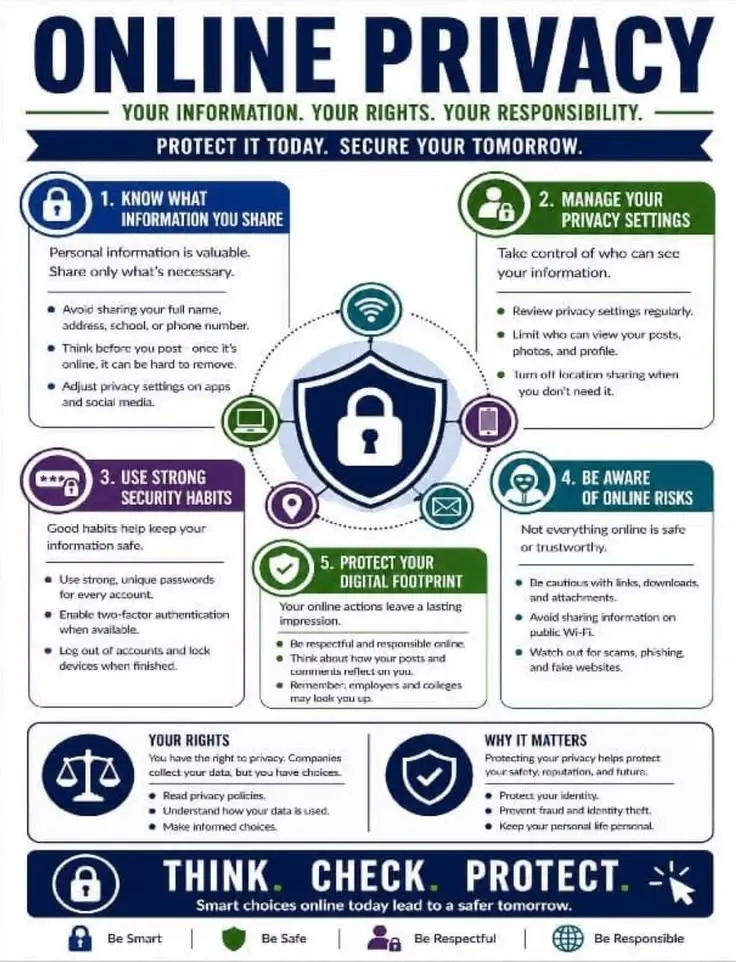
Practical Ways to Enjoy the Benefits of Online Privacy
Understanding the benefits of online privacy is important, but taking action is what makes the difference.
Here are some practical ways to protect your information:
1. Use strong passwords: Create passwords that are difficult to guess and avoid using the same password across multiple accounts.
2. Enable two-factor authentication: Add an extra verification step to important accounts.
3. Review application permissions: Check whether apps genuinely need access to your camera, microphone, contacts, or location.
4. Limit public information: Avoid sharing sensitive details such as your home address, financial information, and identification documents.
5. Be careful with links: Do not enter passwords or payment information through suspicious emails or messages.
6. Keep your devices updated: Install security updates for your phone, computer, browser, and applications.
7. Use trusted websites: Check that a website is legitimate before providing personal or financial information.
8. Review social media settings: Control who can see your posts, photographs, and personal details.
9. Read privacy notices: Understand how a service collects and uses your information before signing up.
10. Log out of shared devices: Always sign out of important accounts when using public or shared computers.
Frequently Asked Questions (FAQs)
1. What are the main benefits of online privacy?
The main benefits include protecting personal information, reducing identity theft risks, improving financial safety, preventing certain online scams, supporting freedom of expression, and maintaining control over personal data.
2. How does online privacy protect my identity?
Online privacy reduces unnecessary exposure of personal information. This can make it harder for criminals to collect details they might use to impersonate you or attempt to access your accounts.
3. Is online privacy important for everyone?
Yes. Anyone who uses the internet can benefit from privacy protection, including students, parents, business owners, employees, and older adults.
4. Can online privacy prevent all cyberattacks?
No. Privacy practices can reduce exposure, but they cannot prevent every cyberattack or data breach. Strong account security, software updates, and awareness of online threats are also important.
5. What is the difference between online privacy and online security?
Online privacy concerns how personal information is collected, used, and shared. Online security focuses on protecting devices, networks, accounts, and data from unauthorised access or attacks. Both work together to create a safer digital experience.
6. How can I protect my privacy on social media?
Use private account settings, avoid publishing sensitive personal details, review who can see your posts, and be cautious when accepting friend or follow requests from people you do not know.
Conclusion
The benefits of having online privacy go far beyond keeping personal information secret. Privacy helps people protect their identities, reduce financial risks, avoid certain online scams, maintain their digital reputations, and communicate with greater confidence.
As the internet continues to influence everyday life, protecting personal information is becoming increasingly important. Every user should understand what information they share, who may access it, and how it might be used.
Fortunately, improving online privacy does not always require complicated technology. Simple habits such as using strong passwords, enabling two-factor authentication, reviewing application permissions, and limiting unnecessary information sharing can make a meaningful difference.
Ultimately, online privacy gives people greater control over their digital lives. It helps create a safer, more trustworthy internet where individuals can learn, communicate, work, and enjoy digital services with greater confidence.