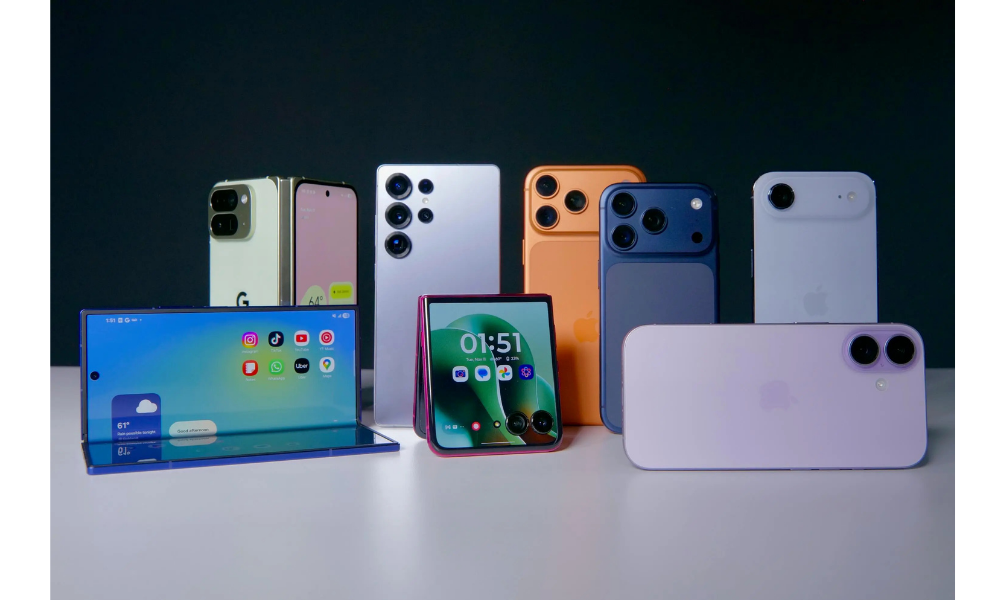
The smartphone industry is entering another major phase of competition in September 2026, with manufacturers focusing on artificial intelligence, faster processors, improved cameras, thinner designs, foldable displays, privacy features and longer-lasting batteries.
The latest smartphone news is particularly busy this month. Apple has launched the iPhone 18 Pro and iPhone 18 Pro Max, Samsung has started the official rollout of One UI 9, and Xiaomi has introduced its new Xiaomi 18 Pro and Xiaomi 18 Pro Max flagship phones. At the same time, new Snapdragon processors are pushing mobile performance and AI capabilities further.
For consumers, this means smartphone technology is changing in several directions at once. Flagship phones are becoming more powerful, AI is becoming a central part of the mobile experience, cameras are gaining more advanced controls, and manufacturers are experimenting with privacy-focused displays and new form factors.
This article covers the latest smartphone news and the biggest developments readers should know about in September 2026.
What Is the Latest Smartphone News in September 2026?
The biggest smartphone stories right now include the iPhone 18 Pro series, Xiaomi 18 Pro series, Samsung’s One UI 9 rollout, new Snapdragon mobile processors and continuing competition around foldable smartphones and AI-powered mobile experiences.
Apple’s iPhone 18 Pro and iPhone 18 Pro Max became available on September 18, following their September 9 announcement. Apple’s new Pro models introduce a 48MP Fusion Main camera with variable aperture, the A20 Pro chip, improved battery technology and Siri AI through iOS 27.
Xiaomi has also entered the spotlight with the Xiaomi 18 Pro and Xiaomi 18 Pro Max. The new phones bring flagship-level processors, advanced displays, powerful camera hardware and a privacy-oriented display feature.
Samsung, meanwhile, is expanding its software ecosystem with the official rollout of One UI 9 to additional Galaxy devices.
These developments show that the smartphone market is no longer competing only on screen size, camera megapixels or processor speed. Software, AI, privacy and ecosystem integration are becoming equally important.
Apple iPhone 18 Pro and iPhone 18 Pro Max
One of the biggest smartphone launches of September is Apple’s iPhone 18 Pro lineup.
Apple announced the iPhone 18 Pro and iPhone 18 Pro Max on September 9, 2026. The phones went on sale in initial markets on September 18.
The new Pro models focus on four major areas:
- Camera improvements
- Performance
- Battery life
- Artificial intelligence
Apple has introduced a new 48MP Fusion Main camera with variable aperture. This is significant because aperture control gives photographers additional control over depth of field and light entering the camera.
The camera can automatically adjust aperture depending on conditions, while users can also manually select among supported aperture settings through the Camera app. Apple has also provided an API that allows developers to use aperture controls in their own applications.
A20 Pro Brings More Mobile AI Power
The iPhone 18 Pro series uses Apple’s A20 Pro chip.
According to Apple, the chip is manufactured using a 2-nanometer process and includes a six-core CPU, seven-core GPU and dual 16-core Neural Engine. Apple says the Neural Engine provides substantially more AI processing capability compared with the previous generation.
This is important because smartphone processors are increasingly being designed around AI workloads.
Instead of sending every AI request to a cloud server, modern smartphones can process more tasks directly on the device. This can help with responsiveness, privacy and offline functionality.
Siri AI Becomes a Major Part of the iPhone Experience
Another major iPhone 18 Pro development is Siri AI.
Apple describes Siri AI as a more personal and capable version of its assistant. It can use personal context, understand information on the screen and help users work with information across apps such as messages, emails and photos.
Siri AI is being introduced as a beta with iOS 27, with language availability expanding over time.
This reflects a broader smartphone industry trend: AI assistants are moving from simple question-answer systems toward assistants that can understand context and help users complete tasks.
Xiaomi 18 Pro and Xiaomi 18 Pro Max Enter the Flagship Race
Xiaomi is another major name in the latest smartphone news.
The Xiaomi 18 Pro and Xiaomi 18 Pro Max have launched with high-end hardware aimed at the premium Android smartphone market. Recent coverage highlights their advanced displays, powerful processors, camera systems and privacy-focused display technology.
The launch is particularly important because Xiaomi continues to compete directly in the premium smartphone segment rather than focusing only on affordable devices.
Privacy Displays Become More Interesting
One of the notable features highlighted around the Xiaomi 18 Pro series is its privacy display functionality.
Traditional smartphone displays can make it relatively easy for people nearby to see what is happening on a screen. Privacy-focused display technology attempts to reduce this problem by limiting viewing angles or changing how information appears from different positions.
This could become increasingly useful for people who use smartphones in:
- Public transportation
- Airports
- Offices
- Cafes
- Universities
- Financial environments
- Business meetings
As smartphones contain more sensitive information, display privacy is becoming an increasingly relevant feature.
Samsung One UI 9 Rollout
Samsung is also making news with its software.
Samsung began the official rollout of One UI 9 in September 2026, bringing the latest Galaxy software experience to more devices.
Software updates are becoming just as important as new hardware launches because they can change how an existing smartphone feels without requiring users to buy a new device.
Samsung’s Galaxy ecosystem has also increasingly integrated AI features, connected-device functions and productivity tools.
Why One UI Updates Matter
A major smartphone purchase decision should not be based entirely on hardware specifications.
A phone with a powerful processor and excellent camera can still become frustrating if its software is poorly optimized or receives limited updates.
Modern buyers should therefore consider:
- Operating system support
- Security updates
- AI features
- App compatibility
- Battery optimization
- Privacy controls
- Cloud and device integration
- Manufacturer update policies
Samsung’s continued One UI development demonstrates why software has become a major part of the smartphone product cycle.
Smartphone AI Is Becoming the Main Competition
One of the clearest trends in the latest smartphone news is the growing importance of AI.
AI is appearing in almost every major smartphone category.
AI Photography
Modern phones use AI and computational photography to improve:
- Low-light images
- Portraits
- Zoom
- Image processing
- Noise reduction
- Video stabilization
- Object recognition
The goal is not simply to increase megapixel numbers.
A 200MP camera, for example, does not automatically produce better photographs than a lower-resolution camera. Image sensors, lenses, processing algorithms and software all affect the final result.
This is why smartphone manufacturers are increasingly promoting computational photography rather than only camera resolution.
AI Assistants
AI assistants are also becoming more capable.
Apple’s Siri AI is one example of this change. Google’s Gemini and Samsung’s Galaxy AI ecosystem represent other approaches.
Instead of simply answering a question, newer AI assistants are increasingly designed to understand context and interact with information across a device.
This could eventually make smartphones more useful as personal productivity tools.
On-Device AI
Another important development is on-device AI.
Processing AI tasks directly on smartphones can provide several potential benefits:
- Faster response times
- Better privacy for certain tasks
- Reduced dependence on an internet connection
- Lower cloud processing requirements
- More personalized experiences
However, not every AI function can necessarily run entirely on a smartphone.
Large AI models may still require cloud infrastructure because of their size and computational requirements.
The future is therefore likely to involve a combination of local and cloud-based AI.

New Smartphone Processors Are Pushing Performance Forward
Smartphone processors are undergoing another major transition.
Recent September 2026 mobile news has highlighted new Snapdragon processors built using advanced manufacturing technology and designed with stronger AI capabilities.
The processor remains one of the most important components inside a smartphone because it affects:
- App performance
- Gaming
- Camera processing
- AI features
- Battery efficiency
- Connectivity
- Multitasking
The shift toward smaller manufacturing processes can potentially allow chip designers to improve performance and efficiency, although real-world battery life depends on the entire device design.
Camera Technology Is Still a Major Battlefield
Smartphone cameras remain one of the biggest selling points for premium phones.
The latest devices are competing through several approaches:
- Larger image sensors
- High-resolution main cameras
- Periscope telephoto cameras
- Variable aperture
- Computational photography
- AI image enhancement
- Better video stabilization
- Professional camera controls
Apple’s iPhone 18 Pro variable-aperture system shows one approach to improving photographic control.
Other manufacturers are pushing high-resolution sensors and multiple specialized cameras.
For consumers, this means the camera specification sheet is becoming increasingly complicated.
Instead of looking at megapixels alone, buyers should consider the entire camera system.
Foldable Smartphones Continue to Expand
Foldable phones remain another major smartphone category in 2026.
Samsung’s Galaxy Z Fold and Z Flip family continues to be one of the most visible foldable ecosystems, while other manufacturers are also competing in this market. Samsung’s current smartphone newsroom lists the Galaxy Z Fold8 Ultra, Fold8 and Flip8 among its recent major mobile releases.
Foldable smartphones offer a different approach to mobile computing.
A foldable can function as a conventional smartphone when closed and provide a larger display when opened.
This makes foldables particularly interesting for:
- Multitasking
- Document editing
- Video consumption
- Gaming
- Business work
- Large-screen productivity
The biggest challenges remain price, durability, weight, battery capacity and long-term hinge reliability.
Smartphone Displays Are Becoming Smarter
Display technology is also changing.
Premium phones are increasingly using high-refresh-rate OLED or AMOLED panels, adaptive refresh rates and higher brightness levels.
But display innovation is not only about making screens brighter.
Privacy is becoming more important, while foldable phones require flexible display technology.
The Xiaomi 18 Pro series’ privacy-focused display approach is an example of manufacturers exploring additional functionality beyond traditional display specifications.
Future smartphone displays may combine:
- Privacy technology
- Variable refresh rates
- Better outdoor visibility
- Lower power consumption
- Foldable designs
- Improved touch technology
- AI-assisted interaction
Battery Life Remains a Key Buying Factor
Despite all the attention surrounding AI and cameras, battery life remains one of the most important smartphone features.
Apple has emphasized significant battery improvements with the iPhone 18 Pro generation. Apple says the iPhone 18 Pro Max provides up to 30 hours of usage on a full charge under its stated usage model, while the device also supports faster charging behavior.
However, battery performance should always be evaluated in real-world use.
Gaming, mobile data, high screen brightness, video recording, navigation and AI processing can all increase power consumption.
This is why processor efficiency and software optimization are just as important as battery capacity.
What Smartphone Buyers Should Look For in 2026
With so many new phones arriving, choosing a smartphone can become confusing.
Instead of focusing on one specification, consider your actual usage.
For Photography
Look for:
- Large main sensor
- Optical image stabilization
- Good telephoto capability
- Strong low-light processing
- Manual camera controls
- High-quality video
For Gaming
Look for:
- High-performance processor
- Efficient cooling
- High-refresh-rate display
- Large battery
- Fast charging
- Stable sustained performance
For AI Features
Look for:
- Dedicated AI hardware
- Modern neural processing
- Long software support
- On-device AI capabilities
- Strong privacy controls
For Everyday Use
Battery life, display quality, software reliability and long-term updates may matter more than extreme benchmark scores.
Smartphone Security Is Becoming More Important
As smartphones become more capable, they also hold more personal information.
A modern smartphone may contain:
- Banking applications
- Password managers
- Private photographs
- Emails
- Work documents
- Payment information
- Personal messages
- Location information
AI-powered features make privacy even more important.
Users should regularly review app permissions and avoid installing applications from unknown sources.
It is also important to keep the operating system and security patches updated.
Hardware security features such as secure authentication, encrypted storage and biometric protection can provide additional layers of protection.
The Rise of the AI Smartphone
The phrase “AI smartphone” is becoming increasingly common, but consumers should understand what it actually means.
A phone does not become an AI device simply because its marketing mentions artificial intelligence.
Useful AI smartphone capabilities can include:
- AI photography
- Real-time translation
- Voice assistants
- Generative image tools
- Writing assistance
- Smart search
- Personal recommendations
- On-device language models
- Automated task assistance
The most interesting development is the combination of these functions into a more unified assistant.
Apple’s Siri AI, Google’s Gemini ecosystem and Samsung’s Galaxy AI strategy show how different manufacturers are approaching this transition.
Smartphone Industry Trends to Watch Next
Several trends are likely to remain important during the rest of 2026.
1. More Powerful Mobile AI
AI processing will continue moving closer to the device.
2. Better Camera Hardware
Variable aperture, larger sensors and advanced telephoto systems are likely to remain important.
3. More Foldables
Foldable smartphones will continue to evolve as manufacturers work on thinner and lighter designs.
4. Privacy-Focused Features
Privacy displays, secure AI processing and better permission controls may become more prominent.
5. Longer Software Support
Consumers increasingly expect smartphones to remain useful for many years.
6. More Efficient Processors
Chip manufacturers will continue competing around performance per watt rather than raw performance alone.
7. AI-Centered Software
Smartphone operating systems are increasingly becoming AI platforms rather than simple app launchers.
Common Mistakes When Following Smartphone News
Believing Every Leak
Leaks can be interesting, but they are not the same as confirmed product information.
For example, upcoming smartphone specifications frequently circulate online before manufacturers officially announce a device.
Always distinguish between:
- Confirmed information
- Reported information
- Rumors
- Leaks
- Speculation
Comparing Only Megapixels
A 200MP camera does not automatically beat a 48MP camera.
Sensor quality, lens design and image processing all matter.
Ignoring Software Support
A phone that receives good hardware but poor software support can become less attractive over time.
Focusing Only on Benchmark Scores
Benchmark performance is useful, but it does not fully describe battery life, thermal behavior, camera quality or everyday usability.
Frequently Asked Questions
What is the biggest smartphone news in September 2026?
Major developments include Apple’s iPhone 18 Pro series, Xiaomi’s 18 Pro flagship phones, Samsung’s One UI 9 rollout and the continuing growth of AI-focused smartphone hardware and software.
What is new about the iPhone 18 Pro?
The iPhone 18 Pro introduces a 48MP Fusion Main camera with variable aperture, the A20 Pro processor, improved battery technology, a redesigned Dynamic Island and Siri AI through iOS 27.
When did the iPhone 18 Pro become available?
Apple says the iPhone 18 Pro and iPhone 18 Pro Max became available in initial markets on September 18, 2026.
What is Xiaomi’s latest flagship phone?
The Xiaomi 18 Pro and Xiaomi 18 Pro Max are among the company’s latest flagship smartphones and launched in September 2026.
What is Samsung One UI 9?
One UI 9 is Samsung’s latest major Galaxy software experience, with its official rollout beginning in September 2026 for supported devices.
Are AI features important in smartphones?
AI is becoming an increasingly important part of smartphone cameras, assistants, translation, search, productivity and device personalization.
Should I buy a smartphone based only on its processor?
No. Processor performance is important, but camera quality, battery life, software support, display quality, storage, connectivity and security should also be considered.
Are foldable smartphones becoming more common?
Yes. Major manufacturers including Samsung and other Android brands continue to develop foldable devices, although traditional smartphones remain the dominant form factor.
Final Thoughts
The latest smartphone news shows that the mobile industry is moving beyond simple hardware upgrades.
Apple’s iPhone 18 Pro series is combining advanced camera technology, a new A20 Pro processor and Siri AI. Xiaomi is competing with new flagship hardware and privacy-oriented display technology, while Samsung continues expanding its Galaxy ecosystem through One UI 9.
At the same time, smartphone processors are becoming increasingly focused on AI performance and efficiency. Cameras are becoming more sophisticated, foldable phones are continuing to evolve, and software updates are becoming an important part of the overall smartphone experience.
For consumers, the most important change may be the growing role of AI.
The smartphone is gradually becoming more than a device for calling, messaging, photography and apps. It is increasingly becoming a personal computing platform capable of understanding context, processing information and assisting with everyday tasks.
The rest of 2026 should therefore bring more competition around AI, cameras, battery efficiency, privacy, displays and mobile processors.
For anyone following smartphone news, these are the areas worth watching as manufacturers prepare their next generation of devices.