The technology industry is moving through another major transition, and the latest tech news from September 2026 shows that artificial intelligence is no longer limited to chatbots and text generation.
The newest developments are increasingly focused on AI agents that can perform tasks, AI glasses that can provide assistance without a phone, AI models that can interact with other applications, and computers designed to run increasingly advanced AI workloads locally.
Meta has just expanded its AI strategy at Connect 2026, bringing its Muse personal AI agent to its glasses and introducing new Ray-Ban Meta products. Google has expanded Gemini with new connected applications and new audio models. OpenAI is pushing ChatGPT Voice toward more agentic workflows. Apple is also positioning new Mac hardware as a way to run demanding AI workloads locally.
These developments point to a broader change in how people may interact with technology.
Instead of opening an app and manually completing every step, users are increasingly being offered AI systems that can understand a request, access information, use connected services and help complete a task.
At the same time, the expansion of AI into glasses and other wearable devices is raising important questions about privacy, permissions and how much access people should give an AI assistant.
Here are the biggest technology developments worth watching right now.
1. Meta Expands Its AI Glasses Strategy
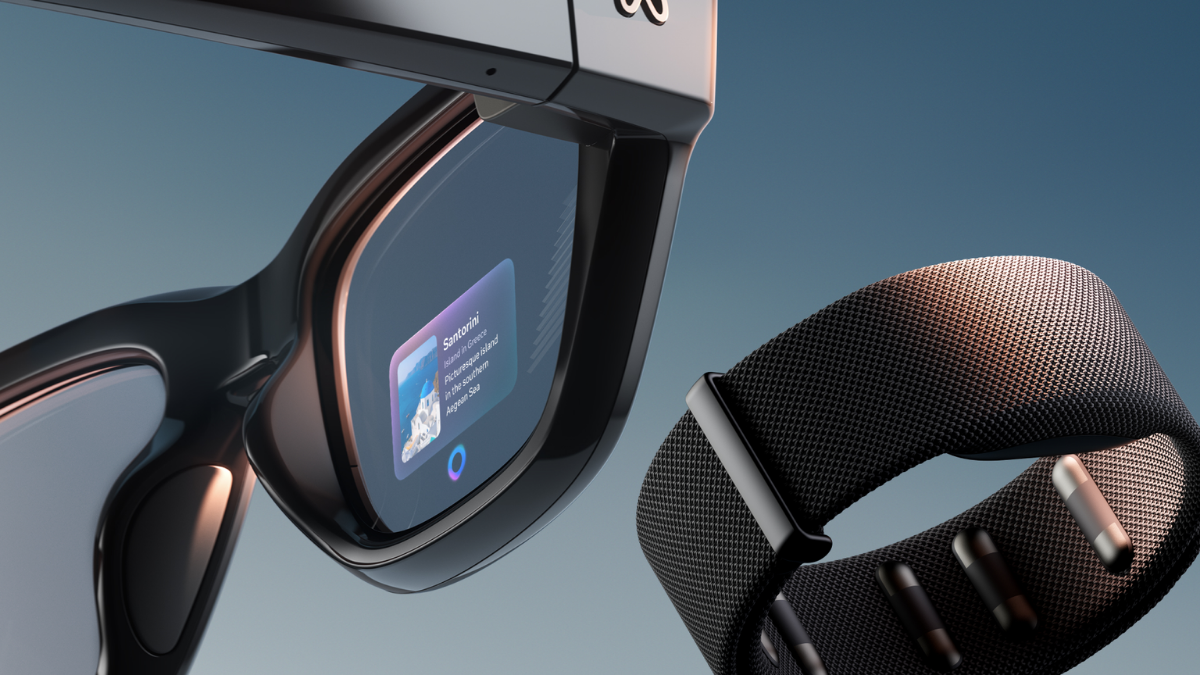
One of the biggest stories in the latest tech news is Meta’s continued investment in AI-powered glasses.
At Meta Connect 2026, Meta announced that its Muse personal AI agent is coming to its AI glasses. The company says Muse is designed to help users manage tasks, stay organized and turn goals into action plans.
This is significant because it changes where an AI assistant can operate.
A chatbot normally lives inside a website or smartphone application.
With AI glasses, the assistant can potentially be available while the user is walking, traveling, shopping, exercising or performing another real-world activity.
Meta says its glasses can already provide functions such as sports information, restaurant recommendations and live translation, while the integration with Muse is intended to expand what the glasses can do.
The company is therefore moving toward a model where AI assistance follows the user rather than remaining tied to a screen.
New Ray-Ban Meta Audio Glasses
Meta also introduced Ray-Ban Meta Audio, described by the company as its first dedicated audio glasses.
The glasses weigh 43 grams and offer up to 12 hours of battery life, with up to another 48 hours available through the charging case, according to Meta. Pre-orders start at $349, with shipping scheduled for October 13.
The glasses are designed for:
- Music
- Podcasts
- Phone calls
- Voice interaction
- AI assistance
- Hands-free use
Unlike camera-equipped smart glasses, audio glasses can offer some AI and wearable functionality without requiring a camera.
That distinction may become increasingly important as consumers become more concerned about recording and privacy.
Ray-Ban Meta Gen 3
Meta also announced Ray-Ban Meta Gen 3.
The new generation includes up to nine hours of battery life, a customizable action button, a 12MP camera and 3K Ultra HD video recording, according to Meta. The starting price is $449.
Meta also says the new glasses include a six-microphone array designed to reduce background noise during calls and voice commands.
The company is clearly positioning glasses as more than a novelty product.
The larger strategy is to create wearable computers that combine cameras, audio, AI and hands-free interaction.
2. Meta’s Muse AI Agent Moves Beyond the Phone
Meta’s Muse is another major development in the current technology news cycle.
The company launched Muse as a personal AI agent designed to perform tasks rather than simply answer questions.
At Connect 2026, Meta emphasized new capabilities, connectors and broader access to the Muse experience. The company is also extending Muse beyond computers and smartphones by bringing it to glasses.
This reflects a larger industry trend.
From Chatbots to AI Agents
Traditional generative AI generally follows a simple model:
User asks → AI answers
Agentic AI attempts something more complicated:
User requests a goal → AI understands the task → AI uses tools → AI completes multiple steps
For example, an agent could potentially help with:
- Scheduling
- Travel planning
- Research
- Shopping
- Organization
- Personal reminders
- Connected applications
This is one reason AI agents are becoming one of the most important technology trends of 2026.
However, agents also introduce additional risks.
A chatbot that gives incorrect information is one problem.
An agent that is allowed to send an email, purchase something or modify an account can create a much bigger problem if it misunderstands the user’s request.
That makes permissions and confirmation systems increasingly important.
3. Google Gemini Expands Its Connected Apps
Google is also pushing Gemini toward a more connected AI experience.
On September 23, Google announced a new wave of connected apps for Gemini. The new integrations include productivity services such as Airtable, Linear, monday.com, PandaDoc, Wispr AI and Zoho. Google also announced integrations involving Adobe, Picsart, Squarespace, Webflow, Apartments.com, Experian, Peloton and SeatGeek.
The idea is straightforward.
Instead of switching between multiple applications, users can increasingly bring external services into Gemini.
For example, a person could use Gemini while working with:
- Project management tools
- Databases
- Creative software
- Website-building platforms
- Fitness services
- Event services
- Other connected applications
Google says users can connect these services through Gemini settings or invoke them in conversations using an @ mention or direct request.
This is another example of AI moving from a standalone assistant toward an interface that connects different services.
4. Gemini Gets New AI Voice Technology
Google has also announced new Gemini 3.8 Flash TTS and Gemini 3.8 Flash-Lite TTS models.
Google describes them as its most expressive audio models yet. They are intended to provide more natural and expressive speech generation.
Voice AI is becoming increasingly important because speaking is often easier than typing.
For many users, the ideal AI assistant may not be a chat window.
It could be a system that listens, understands context and responds naturally.
Voice technology can also become particularly important when combined with wearable devices.
A person wearing AI glasses, for example, does not need to take out a phone to ask a question.
They can potentially speak directly to the assistant.
This creates a connection between two major technology trends:
AI agents + wearable computing
The combination could become one of the defining areas of consumer technology over the next few years.
5. OpenAI Pushes ChatGPT Voice Toward Agentic Work
OpenAI is also moving ChatGPT Voice beyond ordinary conversation.
Recent reporting says OpenAI has expanded Voice capabilities to work with connected applications and agentic workflows, allowing supported users to interact with tools while using voice. TechCrunch reported that Pro and Plus users can use the Work tab on mobile for agentic tasks.
This development matters because voice assistants have traditionally been good at relatively simple tasks.
The next generation aims to combine:
- Voice
- Reasoning
- Connected apps
- Tools
- Documents
- Workflows
Imagine saying what you want instead of typing a detailed prompt.
For example:
“Find the latest sales spreadsheet, summarize the major changes and prepare the information for a presentation.”
The more AI systems can access tools and files, the more natural these workflows become.
But they also require stronger controls.
Users need to know when an AI is simply providing information and when it is actually performing an action.
6. Apple Targets Local AI With New Macs
Apple is approaching the AI hardware race from another direction.
Reuters reported that Apple has introduced upgraded Mac Mini and Mac Studio systems aimed at advanced AI workloads, including workloads that can run locally rather than entirely through cloud services.
The company is positioning its hardware around Apple’s unified-memory architecture and energy efficiency.
One notable demonstration involved running a trillion-parameter AI model across four Mac Studios from a single wall outlet, according to Reuters.
The significance is not simply the benchmark.
The broader trend is local AI.
Why Local AI Matters
Most major AI services rely heavily on enormous data centers.
Cloud AI offers enormous computational power, but it can also involve:
- Data-transfer requirements
- Recurring usage costs
- Internet dependency
- Latency
- Privacy considerations
Local AI can reduce some of these limitations.
If a computer has enough memory and processing power, certain AI workloads can be handled directly on the device.
This can be particularly attractive for:
- Developers
- Researchers
- Businesses
- Content creators
- AI engineers
- Privacy-conscious users
Apple’s new hardware shows that the computer itself is becoming part of the AI infrastructure.
7. AI Agents Are Creating New Security Problems

The rapid expansion of AI agents is also creating a new class of cybersecurity concerns.
A traditional chatbot mostly produces information.
An agent can potentially access systems and perform actions.
That means an attacker may try to manipulate not just the AI’s answer but its actions.
This is becoming an important security issue across the technology industry.
Recent reporting has highlighted concerns involving AI agents, data access, shopping transactions and cybersecurity. Banks have warned that AI shopping agents could introduce fraud, privacy and consumer-protection risks as automated purchasing becomes more common.
This does not mean AI agents are inherently unsafe.
It means their security requirements are different.
An agent should ideally have:
- Limited permissions
- Clear authorization
- User confirmation for sensitive actions
- Strong authentication
- Activity logs
- Safe defaults
- Protection against prompt injection
- Controls over financial transactions
As AI becomes capable of doing more, security becomes part of the product design rather than an afterthought.
8. AI Shopping Is Becoming More Automated
One of the most interesting emerging technology trends is agentic commerce.
Instead of a person manually browsing hundreds of products, an AI assistant can potentially help find products, compare options and initiate purchasing workflows.
Financial institutions are watching this trend closely.
Reuters reported that banks including NatWest, Bank of America, ING, Capital One, Commonwealth Bank of Australia and ASB Bank have raised concerns about the risks associated with AI shopping agents.
The concerns include:
- Fraud
- Incorrect transactions
- Sensitive financial information
- Unclear accountability
- Unsafe payment methods
- Consumer protection
- AI decision-making
This is a sign that agentic AI is moving beyond experimental demonstrations.
Companies are now considering what happens when AI starts interacting directly with commercial systems.
9. Smart Glasses Are Becoming a Major Technology Category
Smart glasses have existed for years, but the current generation is different because AI gives them a more useful interface.
Instead of simply displaying information, AI glasses can potentially:
- Listen to questions
- Understand surroundings
- Translate conversations
- Identify objects
- Provide directions
- Capture photos
- Record video
- Provide information
- Connect to AI agents
Meta’s latest announcements demonstrate how aggressively the company is pursuing this category.
Other companies are also exploring AI wearables.
The goal is increasingly to reduce dependence on a smartphone screen.
The Privacy Question
AI glasses also create a difficult privacy challenge.
Camera-equipped devices can capture people and surroundings without those people necessarily realizing what is happening.
Reuters recently reported broader privacy concerns surrounding AI-powered wearables, including smart glasses and AI pins.
This means future wearable products will need to balance convenience with transparency.
Visible recording indicators, user controls, local processing and clear privacy policies can all become important.
10. Camera-Free AI Glasses Could Be an Important Alternative
Meta’s introduction of audio-focused glasses is particularly interesting because it shows that AI wearables do not necessarily have to include cameras.
Camera-free devices can provide:
- Audio
- Calls
- Music
- Voice assistants
- AI conversations
without continuously capturing visual information.
This could appeal to users who want wearable AI but are uncomfortable with camera-equipped products.
The technology industry may therefore move toward several categories rather than one universal smart-glasses design.
Some people may want:
Audio-only AI glasses
Others may want:
Camera + AI glasses
And some may eventually choose:
Display + camera + AI glasses
Each category will involve different trade-offs.
11. AI Is Moving Closer to Everyday Hardware
One of the biggest patterns across the latest tech news is that AI is moving out of traditional software interfaces.
It is appearing in:
- PCs
- Smartphones
- Smart glasses
- Watches
- Headsets
- Cars
- Cameras
- Home devices
This changes how people interact with computers.
For decades, users learned how to operate software through menus, icons and commands.
AI introduces another interface:
Natural language.
People can increasingly describe what they want instead of learning every step.
That does not mean traditional interfaces will disappear.
Rather, AI is becoming another layer between the user and the software.
12. AI Models Are Becoming More Multimodal
Another major trend is the expansion from text-only AI toward multimodal systems.
Modern AI can increasingly work with combinations of:
- Text
- Images
- Audio
- Video
- Files
- Software tools
- Real-world environments
Google’s new audio models, Meta’s AI glasses and OpenAI’s voice developments all fit within this larger movement.
Multimodal AI matters because the real world is multimodal.
People do not communicate only through text.
They speak, look, listen, point, photograph and interact with physical objects.
The more AI systems can process these forms of information, the more naturally they can fit into everyday life.
13. AI Is Also Becoming More Useful for Businesses
The consumer AI market receives much of the attention, but enterprise technology is changing rapidly as well.
Businesses are increasingly interested in AI systems that can work with:
- Customer data
- Documents
- Emails
- Databases
- Internal knowledge
- Software
- Business workflows
The important difference between an AI chatbot and an enterprise AI agent is action.
A chatbot can answer:
“How do I submit an expense?”
An agent could potentially help guide or automate the workflow.
This is why Microsoft Copilot, Google Gemini, OpenAI’s agentic tools and other enterprise AI platforms are increasingly focused on connected applications.
14. The Biggest Tech Trend: AI Agents
Looking across the latest developments from Meta, Google and OpenAI, one theme appears repeatedly:
AI agents.
The industry is moving from:
Ask AI a question
toward:
Tell AI what you want accomplished.
That is a major conceptual change.
An agent may need to:
- Understand a goal.
- Break the goal into steps.
- Find relevant information.
- Select tools.
- Perform actions.
- Check results.
- Report back to the user.
This is significantly more complicated than generating a paragraph of text.
It also explains why companies are investing heavily in memory, connectors, tools, multimodal understanding and permissions.
What These Latest Tech News Stories Mean for Users
For ordinary technology users, the changes may initially appear small.
A new AI model.
A new glasses design.
A new voice feature.
A new connected app.
But collectively, they point toward a larger transformation.
The smartphone may no longer be the only central interface for AI.
Users could eventually interact with AI through:
- Glasses
- Computers
- Watches
- Headphones
- Cars
- Phones
- Home devices
The AI could follow the user across these environments.
That would create a much more continuous computing experience.
What Businesses Should Watch
Businesses should pay particular attention to five areas.
1. AI Agents
Companies need to understand which business processes could benefit from automation.
2. Security
AI systems with access to business accounts need carefully controlled permissions.
3. Data Privacy
Companies should understand where sensitive information is processed.
4. Local AI
Powerful local hardware could become increasingly useful for organizations that want more control over AI workloads.
5. Employee Training
Employees need to understand both the capabilities and limitations of AI systems.
AI adoption is not simply a software purchase.
It can require changes to workflows and organizational policies.
Common Mistakes to Avoid With New AI Technology
Assuming AI Is Always Correct
AI systems can produce incorrect information.
Human review remains important.
Giving Agents Excessive Permissions
An AI should not have access to information or systems it does not need.
Ignoring Privacy
Users should understand what an AI device can hear, see, store and access.
Buying Hardware Only for AI Hype
A device should solve a real problem rather than simply provide a new AI label.
Automating Sensitive Actions Without Confirmation
Financial transactions, account changes and important communications should receive appropriate human oversight.
Frequently Asked Questions
What is the biggest technology trend in September 2026?
AI agents are one of the most important technology trends currently developing. Major companies are increasingly building AI systems that can use connected services and perform multi-step tasks rather than only generate answers.
What did Meta announce at Connect 2026?
Meta announced new AI glasses, Ray-Ban Meta Audio, Ray-Ban Meta Gen 3 and the expansion of its Muse personal AI agent to AI glasses.
What is Meta Muse?
Muse is Meta’s personal AI agent. Meta is expanding it across devices and says it can help users manage tasks, organize activities and turn goals into action plans.
What is new with Google Gemini?
Google announced a new wave of connected apps for Gemini, including productivity, creativity and lifestyle services. Google has also introduced new Gemini 3.8 Flash TTS and Flash-Lite TTS audio models.
Are AI glasses becoming mainstream?
AI glasses are developing rapidly, with Meta expanding its product lineup and integrating its AI agent into glasses. Broader adoption will depend on factors such as price, usefulness, privacy and battery life.
Why is local AI becoming important?
Local AI allows some workloads to run directly on a device instead of relying entirely on cloud computing. This can potentially improve privacy, reduce latency and give developers more control over AI workloads.
What is agentic AI?
Agentic AI refers to AI systems designed to pursue goals through multiple steps and potentially use external tools, applications or services.
Are AI agents safe?
Safety depends heavily on the system’s design, permissions and controls. AI agents that can perform real-world actions require stronger safeguards than systems that only provide information.
Final Thoughts
The latest technology news from September 2026 shows that the AI industry is entering another stage.
The conversation is increasingly moving away from simple chatbot competition and toward AI agents, connected applications, multimodal systems and AI-powered hardware.
Meta is putting its Muse assistant into wearable devices and expanding its AI glasses lineup. Google is connecting Gemini to more applications and developing increasingly expressive voice technology. OpenAI is pushing ChatGPT Voice toward workflows involving connected tools and agentic tasks. Apple is investing in powerful hardware designed to handle demanding AI workloads locally.
The result could be a very different computing experience.
Instead of constantly opening applications, users may increasingly describe what they want and let AI coordinate the necessary tools.
Instead of looking at a phone, users may ask an AI assistant through glasses.
Instead of sending data to the cloud for every task, some advanced workloads may increasingly run directly on personal computers.
But the technology also creates new responsibilities.
Privacy, security, permissions, accuracy and human oversight will become more important as AI becomes capable of taking actions rather than simply generating text.
For consumers, the biggest question is whether these technologies genuinely make everyday tasks easier.
For businesses, the question is how to adopt AI without losing control over sensitive data and important decisions.
And for the technology industry, the next challenge is clear: turning increasingly powerful AI systems into products that are not only capable, but also reliable, transparent and useful.
The next phase of technology is therefore unlikely to be defined by one single AI model.
It will be defined by how AI becomes part of the devices, applications and services people already use every day.