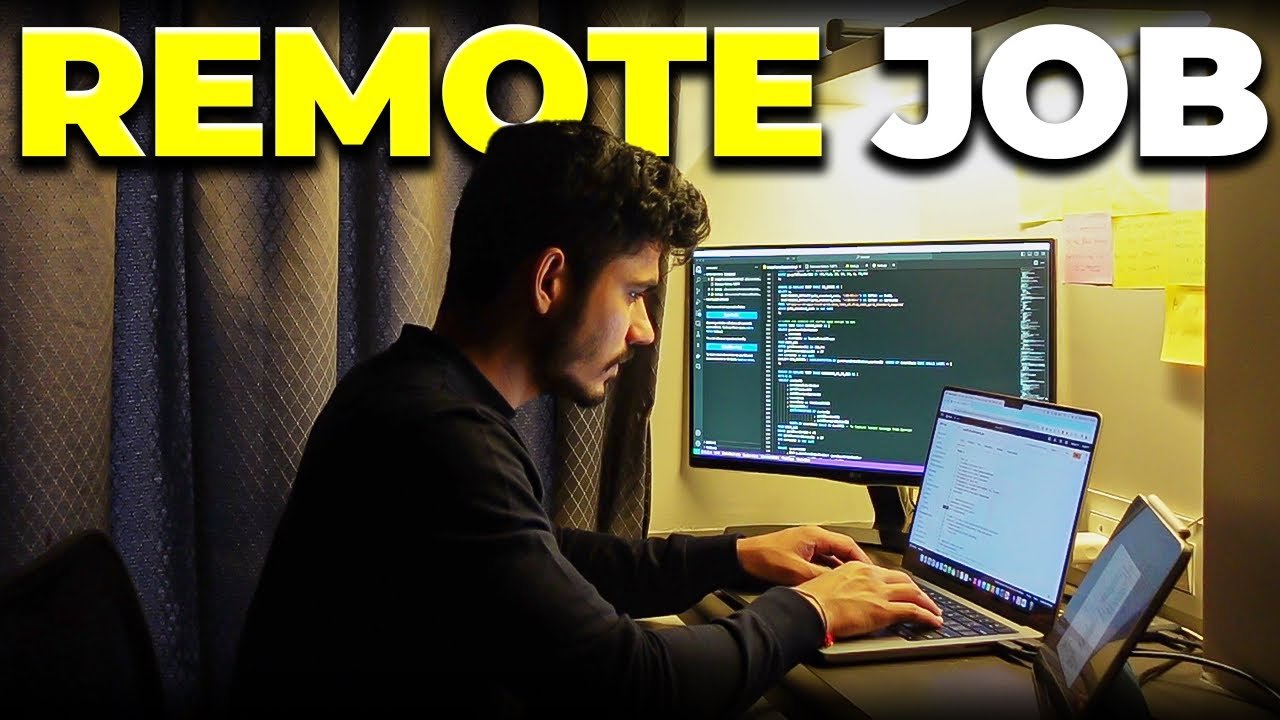
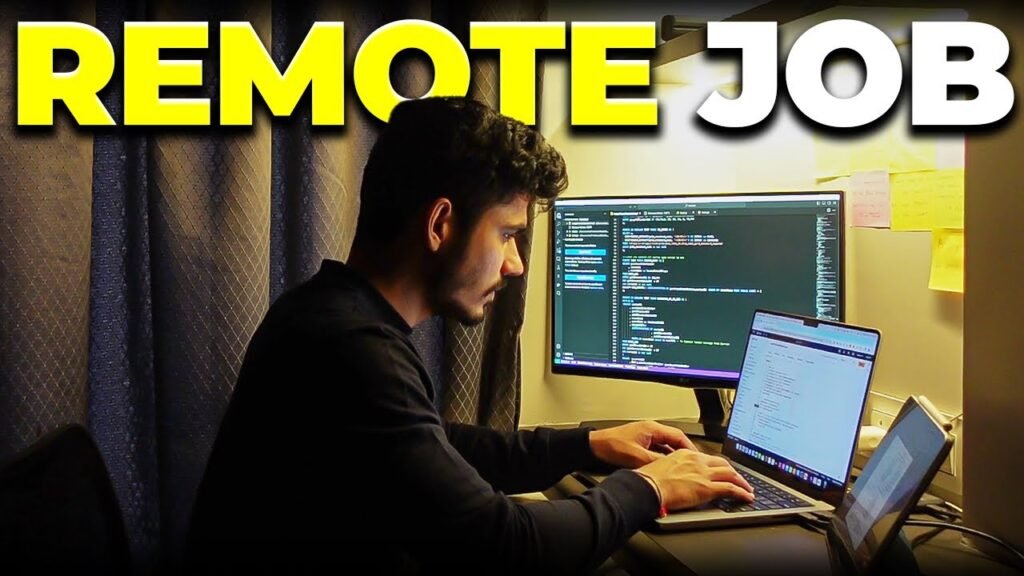
Remote jobs have become an attractive option for people who want to work from home or from almost anywhere with a reliable internet connection. Instead of traveling to an office every day, remote workers can complete their tasks using a computer, internet connection, communication tools, and other digital resources.
But finding a remote job can sometimes be difficult. Many people apply for jobs without getting responses, struggle to create a good resume, or do not know how to present their skills to employers.
This is where artificial intelligence, commonly called AI, can help.
AI tools can help you search for remote jobs, improve your resume, write better cover letters, prepare for interviews, learn new skills, and organize your job search. AI can also help you become more productive after you get a remote job.
However, AI does not guarantee that you will get hired. You still need real skills, honesty, communication abilities, and the willingness to apply and improve.
So, can AI help you get a remote job?
Yes. AI can become a useful assistant throughout your remote job search, especially when you know how to use it correctly.
What Is a Remote Job?
A remote job is a job that allows you to perform your work outside a traditional office.
Depending on the company and position, you may be able to work completely from home or work remotely only on certain days.
Remote jobs exist in many industries. Some common examples include:
- Customer support
- Content writing
- Graphic design
- Software development
- Digital marketing
- Social media management
- Virtual assistance
- Data analysis
- Sales
- Online teaching
- Project management
- Video editing
- Accounting
- Translation
- Search engine optimization
- Administrative work
Some remote jobs require advanced technical skills, while others can be started with basic digital skills and training.
How Can AI Help Me Find a Remote Job?
AI can help with almost every stage of your job search.
It can help you understand job descriptions, identify skills employers are looking for, improve your application documents, practice interviews, and create a plan for learning new skills.
Think of AI as a personal assistant for your job search.
You still make the important decisions, but AI can help you work faster and organize your ideas.
Let’s look at some of the most useful ways AI can help.
1. AI Can Help You Discover Remote Job Opportunities
One of the first challenges is finding suitable remote jobs.
There are many job websites and company career pages, but searching through hundreds of job listings can take a lot of time.
AI can help you create better search phrases based on your skills and interests.
For example, instead of searching only for:
“Remote jobs”
You could ask an AI tool to help you create search terms for:
“Entry-level remote customer support jobs requiring communication skills and basic computer knowledge.”
You can then use those phrases when searching job boards.
AI can also help you identify different job titles that are related to the same type of work.
For example, someone interested in customer service might search for:
- Customer support representative
- Customer service specialist
- Client support assistant
- Customer experience associate
- Support specialist
- Virtual customer service agent
Knowing different job titles can help you find more opportunities.
2. AI Can Help You Choose a Remote Career
Maybe you want a remote job but do not know which career is right for you.
AI can help you explore different options.
You can tell an AI tool about your existing skills, interests, education, and experience. Then you can ask it to suggest remote career paths that match those abilities.
For example, you might say:
“I am good at writing, communicating with people, using social media, and organizing information. What remote careers could match these skills?”
AI can give you ideas such as content writing, virtual assistance, social media management, customer support, or digital marketing.
The suggestions should be treated as starting points rather than guaranteed career recommendations.
You should research each career and learn what employers actually require.
3. AI Can Help You Identify Your Skills
Many people have useful skills but do not know how to describe them professionally.
For example, you may have managed a social media page, helped customers in a small business, created documents, edited videos, or sold products online.
You may not think these activities are valuable because they were not part of a formal job.
AI can help you identify transferable skills.
For example, managing a social media page may demonstrate skills such as:
- Communication
- Content creation
- Social media management
- Audience engagement
- Planning
- Basic analytics
Similarly, helping customers may demonstrate:
- Customer service
- Communication
- Problem-solving
- Patience
- Conflict resolution
The important thing is to describe your real experience accurately. AI should help you explain your skills, not invent experience you do not have.
4. AI Can Help You Write a Better Resume
Your resume is one of the most important documents in a job application.
Unfortunately, many people create resumes that are too long, difficult to read, or not relevant to the position.
AI can help you organize your resume.
You can provide your real work history, education, skills, projects, and achievements and ask AI to help structure the information professionally.
For example, instead of writing:
“I helped customers.”
AI may help you turn this into a clearer description such as:
“Assisted customers with product questions, resolved common issues, and provided timely support.”
The second version explains the work more clearly.
However, you should always check the final resume yourself.
Never allow AI to add qualifications, job titles, certifications, or achievements that you do not actually have.
5. AI Can Help You Customize Your Resume
Sending exactly the same resume to every employer may not always be effective.
Different companies may look for different skills.
For example, one customer support job might emphasize communication, while another might focus on technical troubleshooting.
AI can compare a job description with your existing resume and help identify which of your genuine skills are most relevant.
You can then adjust your resume to highlight those skills.
This can make your application more relevant without creating false information.
6. AI Can Help You Write Cover Letters
Some remote jobs ask applicants to submit a cover letter.
Writing a new cover letter for every application can take time.
AI can help you create a starting draft based on:
- The company
- The position
- Your experience
- Your relevant skills
- Your interest in the role
For example, you could provide the job description and your actual experience and ask AI to create a professional cover letter.
You should then personalize it.
A cover letter that sounds completely generic or robotic may not make a strong impression.
AI should help you communicate your real experience more clearly rather than replace your personality.
7. AI Can Help You Understand Job Descriptions
Some job descriptions contain complicated language.
You might see terms such as:
- CRM
- SaaS
- SEO
- KPI
- CMS
- API
- Project management software
- Customer relationship management
- Technical support
If you do not understand a term, you can ask AI to explain it in simple language.
You can also ask:
“What skills are the employer actually looking for in this job description?”
This can help you decide whether the position is suitable for you.
8. AI Can Help You Prepare for Remote Job Interviews
Getting an interview is an important step, but the interview itself can be challenging.
AI can help you practice before speaking with an employer.
You can provide the job title and ask AI to generate common interview questions.
For example, a remote customer support interview might include questions such as:
- Tell me about yourself.
- Why do you want this job?
- How would you handle an angry customer?
- How do you organize your work?
- Why do you want to work remotely?
- What would you do if you did not know the answer to a customer’s question?
You can practice answering these questions before the real interview.
AI can also help you improve the structure of your answers.
9. AI Can Act as an Interview Practice Partner
One useful way to use AI is to simulate an interview.
You can ask the AI to act as an interviewer and ask you questions one at a time.
After answering, you can ask for feedback on:
- Clarity
- Grammar
- Structure
- Relevance
- Confidence
- Missing information
This gives you an opportunity to practice without the pressure of a real interview.
However, remember that an AI-generated interview simulation cannot perfectly predict what a real employer will ask.
10. AI Can Help You Learn Skills for Remote Jobs
Perhaps you are not qualified for the remote job you want yet.
That does not mean you should give up.
AI can help you create a learning plan.
For example, if you want to become a content writer, you could ask AI to create a 30-day beginner learning plan covering:
- Writing fundamentals
- Research
- Grammar
- Headlines
- Blog structure
- Editing
- Search engine optimization
- Content planning
If you want to become a virtual assistant, AI can help you learn about:
- Email management
- Calendar management
- Online communication
- Spreadsheets
- Customer service
- Project management tools
The exact learning path depends on the career you choose.
11. AI Can Help You Build a Portfolio
Some remote jobs require a portfolio.
A portfolio gives employers examples of what you can actually do.
For example, a content writer could create sample blog posts.
A graphic designer could create sample designs.
A social media manager could create sample content calendars.
A web developer could create sample websites.
AI can help you brainstorm portfolio projects and organize your work.
For example, you can ask:
“What are five beginner portfolio projects I can create to demonstrate my social media marketing skills?”
You can then complete the projects yourself and use them to demonstrate your abilities.
12. AI Can Help You Improve Your Communication
Communication is extremely important in remote work.
When you work remotely, you may communicate through:
- Chat
- Video calls
- Project management platforms
- Shared documents
AI can help you improve professional communication.
For example, you can write a rough message and ask AI to make it clearer and more professional.
You can also practice writing professional emails, project updates, customer responses, and meeting summaries.
Good communication can be especially useful when your coworkers are working in different locations or time zones.
13. AI Can Help You Improve Your English
For people who work with international companies, strong written communication can be valuable.
AI can help you practice English grammar, vocabulary, sentence structure, and professional writing.
For example, you can write a short paragraph and ask AI to:
- Correct grammar mistakes
- Explain the mistakes
- Make the writing clearer
- Suggest better vocabulary
- Make the message more professional
This can help you improve over time.
The goal should be to learn from the corrections rather than simply copy everything AI produces.
14. AI Can Help You Become More Productive
AI can also be useful after you get a remote job.
Remote workers often need to manage their own schedules and responsibilities.
AI can help you:
- Create task lists
- Summarize meeting notes
- Draft emails
- Organize ideas
- Create outlines
- Brainstorm solutions
- Explain complicated information
- Create work plans
For example, if you have ten tasks to complete in a day, AI can help you organize them based on urgency and estimated effort.
You should still make the final decisions because you understand your workplace responsibilities better than an AI tool.
15. AI Does Not Guarantee a Remote Job
It is important to understand the difference between assistance and results.
AI can help you prepare a resume.
AI can help you practice interviews.
AI can help you learn skills.
AI can help you find job-search strategies.
But AI cannot guarantee that an employer will hire you.
Companies make hiring decisions based on many factors, including qualifications, experience, communication, availability, job requirements, and the needs of the company.
You still need to put in the work.
16. Do You Need a Degree to Get a Remote Job?
Not every remote job requires a university degree.
The requirements depend heavily on the position and employer.
Some professional careers require formal education or specific qualifications.
Other jobs may place more emphasis on practical skills, experience, portfolios, certifications, or demonstrated ability.
Examples of remote work that may sometimes be accessible without a traditional degree include:
- Customer support
- Virtual assistance
- Content writing
- Social media assistance
- Data entry
- Sales
- Transcription
- Online tutoring
- Video editing
- Graphic design
However, “no degree required” does not mean “no skills required.”
You still need to demonstrate that you can perform the work.
17. Can AI Help Beginners Get Remote Jobs?
Yes, beginners can use AI as a learning and job-search assistant.
If you have little professional experience, AI can help you understand what skills are required for different jobs and create a learning plan.
For example, you could choose a beginner-friendly field such as virtual assistance.
You could then use AI to learn:
- Professional communication
- Email management
- Calendar organization
- Basic spreadsheets
- Online research
- Task management
- Customer communication
After learning these skills, you could create sample projects and begin applying for suitable positions.
18. How to Use AI Without Becoming Dependent on It
One of the biggest mistakes you can make is allowing AI to do everything for you.
If you copy AI-generated answers without understanding them, you may struggle during an interview or while doing the actual job.
Instead, use AI as a learning partner.
For example:
Instead of:
“Write everything for me.”
Try:
“Explain how I can do this task and give me an example.”
This approach helps you develop your own skills.
19. Common Mistakes to Avoid When Using AI for Job Hunting
There are several mistakes you should avoid.
Using fake information
Never ask AI to create fake work experience or qualifications.
Sending generic applications
Do not send the exact same AI-generated application to every employer.
Copying everything without checking
AI can make mistakes. Always review important information.
Using unnatural language
If your application sounds like it was copied from a machine, it may not represent you well.
Applying without learning the required skills
AI cannot replace actual ability.
Ignoring privacy
Avoid giving AI tools unnecessary sensitive personal information, passwords, financial details, or confidential company information.
20. A Simple AI-Powered Remote Job Strategy
If you are starting from zero, you can follow a simple process.
Step 1: Choose a career area
Decide what type of remote work interests you.
Step 2: Research the requirements
Ask AI to explain the common skills required for that career.
Step 3: Learn the skills
Use courses, tutorials, practice projects, and AI as a learning assistant.
Step 4: Build a portfolio
Create examples that demonstrate your abilities.
Step 5: Create your resume
Use AI to organize your genuine experience and skills.
Step 6: Prepare a cover letter
Create a customized draft for relevant applications.
Step 7: Search for jobs
Use remote job boards, company career pages, professional networks, and other legitimate sources.
Step 8: Practice interviews
Use AI to simulate interview questions.
Step 9: Apply consistently
Do not expect one application to immediately produce a job offer.
Step 10: Learn from rejection
If you do not get selected, review your application and continue improving.
What Skills Should You Learn for Remote Work?
The right skills depend on your chosen career, but several skills are useful across many remote positions.
These include:
- Written communication
- Time management
- Problem-solving
- Digital literacy
- Organization
- Teamwork
- Adaptability
- Basic computer skills
- Professional communication
- Self-discipline
Technical skills may also be required depending on your chosen field.
Can AI Replace Human Workers?
AI can automate certain tasks, but remote jobs still require people for many responsibilities.
Human workers provide things such as judgment, communication, creativity, relationship building, leadership, accountability, and decision-making.
The workplace is also changing as companies adopt AI tools.
Instead of thinking only about whether AI will replace a particular job, it can be useful to consider how AI may change the tasks involved in that job.
Learning how to work effectively with AI can therefore become a useful additional skill.
Final Thoughts
So, can AI help you get a remote job?
Yes. AI can be a valuable tool for your remote job search.
It can help you discover career options, understand job descriptions, identify your skills, improve your resume, write cover letters, practice interviews, learn new skills, create portfolio ideas, and improve professional communication.
But AI is not a magic solution.
Getting a remote job still requires real skills, effort, patience, communication, and persistence.
The best approach is to use AI as an assistant rather than a replacement for your own work.
Learn the skills you need. Build evidence of what you can do. Create honest applications. Practice your interviews. Apply consistently. Then use AI to make the process more organized and efficient.
If you use AI responsibly while continuing to develop your own abilities, it can become a useful part of your journey toward remote work.
Frequently Asked Questions
Can AI help me find a remote job?
Yes. AI can help you identify suitable career paths, understand job descriptions, improve your resume, prepare cover letters, practice interviews, and create job-search strategies.
Can I get a remote job without a degree?
Some remote positions do not require a university degree, but requirements vary by employer and career. Practical skills, experience, portfolios, and other qualifications can still be important.
Can AI write my resume?
AI can help organize and improve your resume, but you should provide accurate information about your real experience, education, skills, and achievements.
Can AI help me prepare for a remote interview?
Yes. You can use AI to generate practice questions, simulate interviews, improve your answers, and identify areas where your communication could be clearer.
Can AI help me learn a skill for a remote job?
Yes. AI can explain concepts, create study plans, provide practice exercises, answer questions, and help you review your work.
Is it okay to use AI when applying for jobs?
Using AI as an assistant can be useful, but you should review everything it produces and make sure your application accurately represents your experience and abilities.
Can AI guarantee that I will get a remote job?
No. AI can support your job search, but no tool can guarantee that an employer will hire you.
What is the easiest remote job to get?
There is no single remote job that is easiest for everyone. The difficulty depends on your skills, experience, competition, employer requirements, and the type of work.
Should I tell an employer that I used AI?
The answer can depend on the employer’s policies and how you used it. Always follow the company’s instructions. If AI use is restricted, do not violate those rules.
What should I do first if I want a remote job?
Start by choosing a type of work that matches your interests and abilities. Then research the required skills, learn what you are missing, build practical examples, prepare your resume, and begin applying for suitable positions.