Artificial intelligence has become one of the most important technologies in the modern world. From smartphones and search engines to business software and online learning platforms, AI is becoming part of many activities people perform every day.
One area of artificial intelligence that has received significant attention is Generative AI.
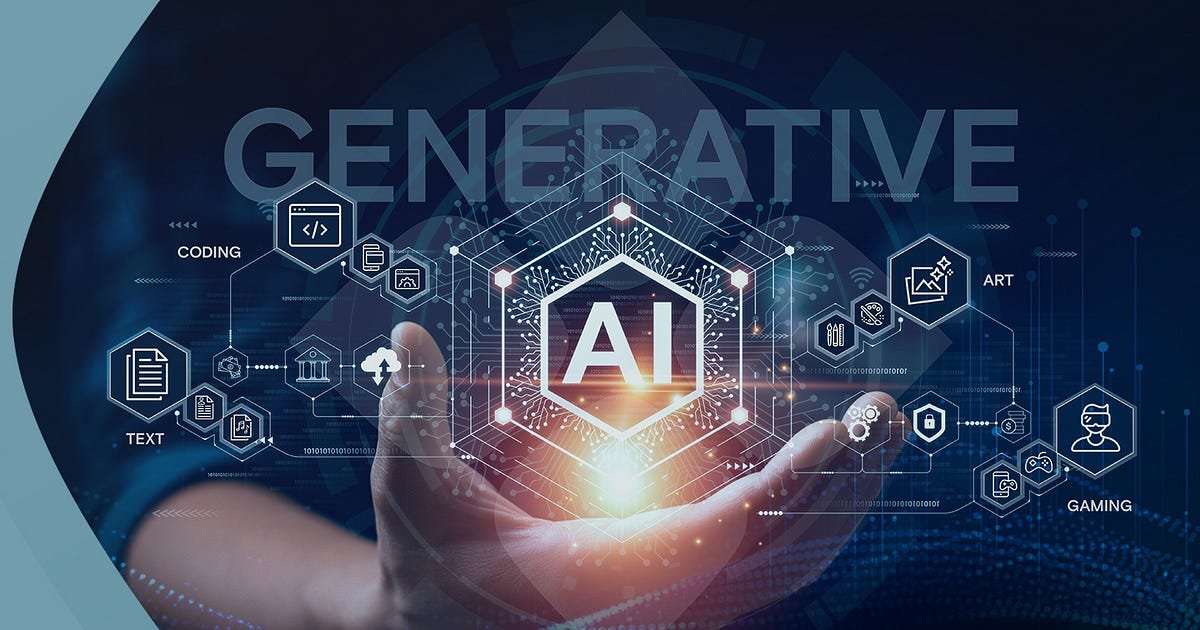
Generative AI is a type of artificial intelligence that can create new content based on instructions or prompts provided by a user. It can generate text, images, audio, video, computer code, and other types of content.
For example, a person can ask a generative AI tool to write a blog post, create an image of a beautiful landscape, explain a difficult subject, summarize a document, or help write computer code.
This makes Generative AI useful for students, businesses, writers, designers, developers, marketers, teachers, researchers, and many other people.
But what exactly is Generative AI? How does it work? What can it create? What are its advantages and disadvantages? And how can ordinary people use it?
This article explains Generative AI in simple terms.
What Does Generative AI Mean?
The word generative comes from the idea of generating or creating something.
Traditional AI systems are often designed to analyze information, recognize patterns, classify things, or make predictions. Generative AI goes a step further by producing new content.
For example, a traditional AI system might identify whether an email is spam or not.
A Generative AI system could write a new email based on your instructions.
Similarly, a traditional image-recognition system might identify an object in a photograph. A Generative AI system can create a new image based on a description.
For example, you could provide a prompt such as:
“Create an illustration of a modern city at sunset with people walking along the streets.”
A generative image system can use that instruction to create an image that matches the description.
How Does Generative AI Work?
Generative AI systems are trained using large amounts of data.
Depending on the system, the training data may include text, images, audio, video, computer code, or combinations of different types of information.
During training, the AI learns patterns from the data.
For example, a language model can learn patterns in how words and sentences are used. An image-generation model can learn patterns associated with visual information.
When a user provides a prompt, the AI uses what it learned during training to generate an output that matches the request as closely as possible.
It is important to understand that Generative AI does not simply copy and paste an answer from one document. Modern systems generate outputs based on patterns learned during training and the instructions they receive.
However, AI-generated content can still contain mistakes, unexpected results, or information that needs to be checked.
What Can Generative AI Create?
One of the most interesting things about Generative AI is the variety of content it can produce.
1. Text
Generative AI can create many types of written content.
For example, it can help users write:
- Blog posts
- Emails
- Social media captions
- Product descriptions
- Reports
- Stories
- Scripts
- Study notes
- Business proposals
- Marketing ideas
- Summaries
A user can provide a topic and ask the AI to create a first draft.
The user can then review and improve the content.
2. Images
Generative AI can also create images from text instructions.
For example, you could describe a character, product, landscape, building, logo concept, or illustration.
The AI can turn the description into a visual result.
This can be useful for designers, marketers, content creators, and businesses that need visual ideas.
3. Audio
Some generative AI systems can create or transform audio.
They can be used for tasks such as generating speech, creating sound effects, assisting with music production, or transforming written text into spoken audio.
This can be useful for podcasts, videos, educational content, and other projects.
4. Video
Generative AI is also being used to create and edit video content.
Depending on the tool, users may be able to generate short video clips from text descriptions or use AI to assist with editing, animation, and other production tasks.
Video generation is an area that continues to develop rapidly.
5. Computer Code
Generative AI can help programmers write and understand code.
For example, a developer can ask an AI tool to:
- Explain a programming concept
- Create a basic function
- Find possible errors
- Convert code from one language to another
- Generate documentation
- Suggest improvements
- Create a starting point for an application
The developer still needs to review and test the code because AI-generated code can contain errors.
What Is a Generative AI Model?
A Generative AI model is the underlying system that has been trained to generate content.
Different models can be designed for different types of content.
For example, some models specialize in language, while others specialize in images, audio, video, or multiple types of information.
Some modern AI systems are multimodal, meaning they can work with more than one type of input or output.
For example, a multimodal AI system may be able to understand text and images and respond using text.
What Is a Prompt?
A prompt is the instruction or input that a user gives to a Generative AI system.
For example:
“Write a simple 500-word article explaining how solar energy works.”
That instruction is a prompt.
The quality of the prompt can influence the usefulness of the result.
A vague prompt might produce a general answer, while a detailed prompt can provide more direction.
For example, instead of saying:
“Write about fitness.”
You could say:
“Write a beginner-friendly 1,000-word article explaining five simple exercises that adults can do at home without gym equipment.”
The second prompt provides more information about the desired result.
Why Has Generative AI Become So Popular?
Generative AI has become popular because it can help people perform many tasks quickly.
In the past, someone might spend hours creating a first draft of an article.
With Generative AI, they can provide a topic and receive a draft in a short amount of time.
A designer might use AI to generate ideas before creating a final design.
A student might use AI to explain a difficult topic in simpler language.
A business owner might use AI to brainstorm marketing ideas.
This ability to assist with different tasks makes Generative AI useful across many industries.
How Can Students Use Generative AI?
Students can use Generative AI as a learning assistant.
For example, a student can ask an AI tool to explain a difficult concept using simple language.
They can also ask it to create practice questions, provide examples, summarize study material, or help them organize a study plan.
For example:
“Explain photosynthesis to me as if I am a beginner.”
The AI can provide a simpler explanation.
However, students should use AI to support learning rather than simply submitting AI-generated work as their own.
The goal of education is to develop knowledge and skills, so students should still read, think, practice, and solve problems themselves.
How Can Businesses Use Generative AI?
Businesses can use Generative AI in many different ways.
For example, a small business could use AI to brainstorm social media content, create draft emails, write product descriptions, summarize meetings, or develop customer-service responses.
Marketing teams can use it to generate content ideas and draft advertisements.
Customer service teams can use AI to help organize and respond to common questions.
Human employees can then review the generated content before it is sent to customers.
Generative AI can therefore act as an assistant rather than completely replacing human workers.
How Can Content Creators Use Generative AI?
Content creators can use AI to speed up parts of their creative workflow.
For example, a YouTube creator could use AI to brainstorm video topics, create an outline, develop a script, generate title ideas, or write a video description.
A blogger could use AI to organize article ideas and create a first draft.
A social media creator could use AI to brainstorm captions and content calendars.
However, good content still requires human creativity, experience, editing, and understanding of the audience.
AI can provide a starting point, but the creator remains responsible for the final result.
How Can Generative AI Help With Learning?
Generative AI can provide personalized explanations.
Different people learn in different ways. Someone might understand a subject better through examples, while another person may prefer a step-by-step explanation.
A user can ask AI to explain the same subject in different ways.
For example:
“Explain this topic using a simple example.”
Or:
“Explain this topic using a real-life business example.”
This flexibility can make learning more accessible.
AI can also help people practice languages, generate quizzes, summarize lessons, and explain unfamiliar words.
What Are the Benefits of Generative AI?
Generative AI has several potential benefits.
Saves Time
AI can quickly create drafts, summaries, ideas, and other content.
Supports Creativity
It can help people brainstorm ideas and explore different possibilities.
Improves Productivity
AI can assist with repetitive writing, research, organization, and other tasks.
Makes Learning More Interactive
Users can ask follow-up questions and request explanations at different levels.
Helps Small Businesses
Small businesses can use AI for tasks that might otherwise require additional time or resources.
Supports Accessibility
AI can help with translation, summarization, speech generation, and other tasks that may make information easier to access.
What Are the Disadvantages of Generative AI?
Generative AI also has limitations.
AI Can Make Mistakes
AI-generated content is not guaranteed to be correct.
A system may provide an answer that sounds convincing but contains inaccurate information.
AI Can Produce Biased Content
Because AI systems learn from data, problems in the data can sometimes influence their outputs.
Privacy Can Be a Concern
Users should be careful about entering private or confidential information into AI systems.
AI Can Create Misleading Content
Generative AI can make it easier to create realistic-looking text, images, audio, and videos.
This can create challenges involving misinformation and deceptive content.
People Can Become Too Dependent
If people use AI for everything, they may spend less time developing their own writing, research, problem-solving, and creative skills.
Can Generative AI Replace Humans?
This is one of the most common questions about AI.
Generative AI can automate certain tasks, but that does not mean it can replace every human activity.
Human beings bring experiences, values, relationships, judgment, cultural understanding, emotions, and personal responsibility to their work.
AI can generate a business email, but a human may still need to decide what the business should communicate.
AI can generate an image, but a designer may still need to determine whether the image fits the brand.
AI can write code, but developers may need to test it, secure it, and make sure it works correctly.
In many situations, the most useful approach is to combine AI assistance with human judgment.
Is Generative AI the Same as Traditional AI?
Generative AI is a type of artificial intelligence, but not all AI is Generative AI.
Traditional AI systems can perform tasks such as:
- Classification
- Prediction
- Fraud detection
- Recommendation
- Pattern recognition
- Data analysis
Generative AI focuses on producing new content.
For example, a recommendation system may suggest a movie you might enjoy. A Generative AI system could write a movie review or create a fictional story based on a movie concept.
Both are forms of AI, but they serve different purposes.
What Is the Difference Between AI and Generative AI?
Artificial intelligence is a broad field.
Generative AI is one part of that field.
Think of AI as a large category that includes different types of systems and techniques.
Generative AI belongs inside that larger category because it uses artificial intelligence to generate new content.
This means every Generative AI system is AI, but not every AI system is Generative AI.
Is Generative AI Free?
Some Generative AI tools offer free versions, while others require paid subscriptions or usage fees.
The available features can vary between services.
Free plans may have limits on the number of requests, available models, file uploads, image generation, or other features.
Businesses and professional users may choose paid plans when they need additional capabilities.
Before using an AI service for important business work, users should understand its pricing, terms, privacy policies, and limitations.
How Can Beginners Start Using Generative AI?
Beginners do not need to be programmers to start learning about Generative AI.
A simple way to begin is to choose everyday tasks.
For example, you can ask AI to:
- Explain a difficult topic.
- Rewrite a paragraph in simple English.
- Create a study plan.
- Brainstorm business ideas.
- Generate social media content ideas.
- Summarize information.
- Help organize a project.
- Practice a language.
- Create an outline for an article.
- Explain computer code.
The more you experiment, the better you can understand what AI does well and where it needs human assistance.
How to Write Better Generative AI Prompts
Good prompts can make AI outputs more useful.
A useful prompt can include:
- The task
- The topic
- The target audience
- The desired length
- The tone
- Important information
- The desired format
For example:
“Write a 1,500-word beginner-friendly blog post about Generative AI. Use simple English, clear headings, practical examples, and a frequently asked questions section.”
This gives the AI much more direction than simply saying:
“Write about AI.”
Should You Trust Everything Generated by AI?
No.
AI-generated content should be reviewed, especially when it involves important facts.
If you are using AI for research, check important claims against reliable sources.
If you are using AI for business, review content before sending it to customers.
If you are using AI for school, make sure you understand the material rather than simply copying the generated response.
AI can be extremely useful, but human review remains important.
What Is the Future of Generative AI?
Generative AI is likely to continue developing.
Future systems may become better at understanding context, handling different forms of media, following complex instructions, and assisting with professional tasks.
AI may become more deeply integrated into software used for work, education, communication, design, programming, and business management.
However, the future will not depend only on technical improvements.
Important issues such as privacy, safety, copyright, misinformation, employment, and accountability will also influence how Generative AI develops and how society uses it.
Why Should You Learn About Generative AI?
You do not have to become an AI engineer to benefit from understanding Generative AI.
Basic knowledge can help you recognize opportunities and limitations.
For students, it can become a learning assistant.
For employees, it can help with productivity.
For business owners, it can support marketing and administration.
For freelancers, it can help with research, writing, design, and other services.
For content creators, it can support brainstorming and production.
The important thing is to learn how to use it responsibly.
Final Thoughts
Generative AI is a type of artificial intelligence that can create new content such as text, images, audio, video, and computer code.
It works by learning patterns from large amounts of data and using those patterns to generate responses based on user instructions.
Generative AI can save time, support creativity, improve productivity, and make learning more interactive. It is already being used across education, business, marketing, software development, entertainment, and many other areas.
However, it is not perfect. AI can make mistakes, produce biased or misleading content, create privacy concerns, and encourage overdependence if people use it without thinking critically.
The best way to approach Generative AI is to see it as a powerful tool rather than a replacement for human judgment.
Learn how it works, experiment with different uses, check important information, protect your private data, and continue developing your own skills.
As AI continues to evolve, understanding Generative AI can help you participate more confidently in the changing digital world.
Frequently Asked Questions About Generative AI
What is Generative AI in simple words?
Generative AI is technology that can create new content based on instructions from a user. It can generate text, images, audio, video, code, and other types of content.
What is an example of Generative AI?
An AI chatbot that creates text in response to a user’s prompt is an example of Generative AI. AI image generators and AI coding assistants are also examples.
Is ChatGPT Generative AI?
Yes. ChatGPT is an example of a Generative AI application because it can generate text and other responses based on user instructions.
Can Generative AI create images?
Yes. Some Generative AI systems can create images from text descriptions.
Can Generative AI create videos?
Yes. Some AI systems can generate or assist with video creation, although capabilities vary between tools.
Can Generative AI write computer code?
Yes. Generative AI can generate, explain, modify, and assist with computer code. However, developers should test AI-generated code before using it in important applications.
Is Generative AI difficult to learn?
Using Generative AI tools can be relatively easy for beginners. You do not necessarily need programming knowledge to use many AI applications.
Can Generative AI replace human creativity?
Generative AI can perform many creative tasks, but human creativity involves personal experiences, judgment, goals, emotions, and cultural context. AI is often most useful when it supports rather than completely replaces human creativity.
What are the risks of Generative AI?
Some risks include inaccurate information, bias, privacy concerns, misinformation, security issues, copyright questions, and overdependence on AI.
Why is Generative AI important?
Generative AI is important because it can help people create content, learn, automate tasks, solve problems, and work more efficiently across many industries.
Should beginners learn Generative AI?
Yes, learning the basics can be useful because Generative AI is becoming increasingly relevant to education, business, employment, content creation, and everyday digital work.