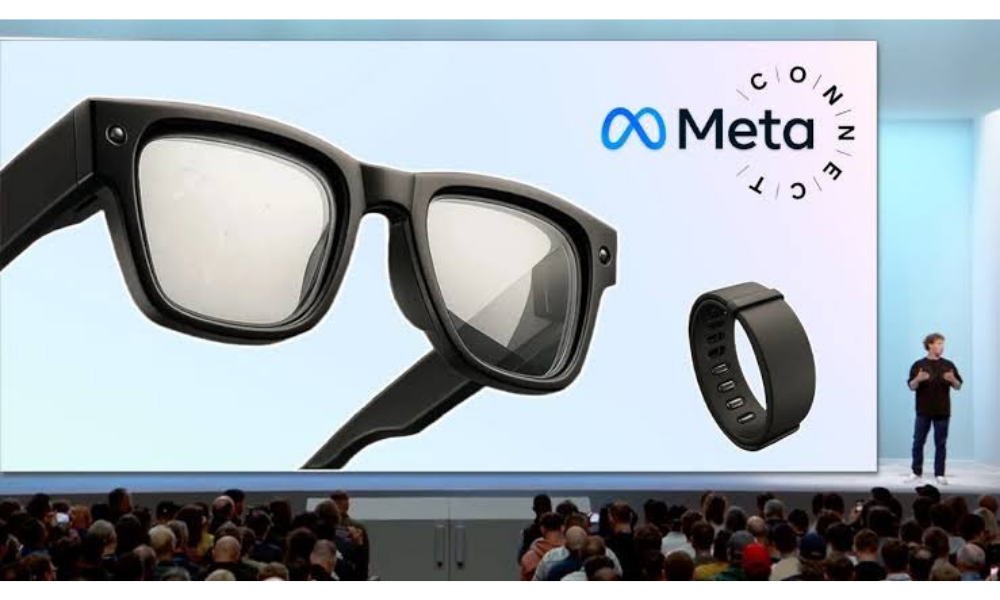
Meta is making some of its biggest moves yet in artificial intelligence and wearable computing, making September 2026 an important month for the company’s technology strategy.
The latest Meta news is no longer focused only on Facebook, Instagram and WhatsApp. The company is increasingly building an ecosystem around artificial intelligence, AI agents, smart glasses, wearable computing and new hardware designed to reduce dependence on the traditional smartphone interface.
At Meta Connect 2026, Meta announced a major expansion of its AI glasses lineup, brought its Muse personal AI agent to glasses, introduced Ray-Ban Meta Audio, announced the next-generation Ray-Ban Meta Gen 3, and revealed additional updates for Meta Ray-Ban Display.
Meta’s strategy is becoming increasingly clear.
The company wants AI to be available throughout the day rather than only inside a smartphone app.
That means a person could potentially speak to an AI assistant through glasses, use a handheld device such as Meta Charm, interact with AI through WhatsApp, or ask Muse to perform tasks across connected applications.
At the same time, Meta is expanding subscription options through Meta One, giving users, creators and businesses access to additional AI capabilities and other premium features.
This article covers the biggest Meta news and explains what the company’s latest announcements mean for AI, smart glasses, social media, creators, businesses and everyday users.
What Is Happening With Meta in September 2026?
Meta’s latest developments can be grouped into several major technology trends:
- Meta Muse AI
- AI agents
- Ray-Ban Meta Audio
- Ray-Ban Meta Gen 3
- Meta Ray-Ban Display
- Meta VR Glasses
- Meta Charm
- Meta One subscriptions
- AI-powered social media
- Wearable computing
- Multimodal AI
- AI privacy and security
- Creator tools
- Business AI
The common theme is AI moving closer to the user.
Instead of requiring people to sit in front of a screen, Meta is developing devices and services that allow people to communicate with AI while doing other things.
This is especially visible in Meta’s smart-glasses strategy.
1. Meta Muse Is Becoming the Center of Meta’s AI Strategy
One of the biggest Meta news stories of September is Muse.
Meta introduced Muse on September 8 as a personal AI agent designed to do more than answer questions. Meta says Muse can help people manage tasks and projects, turn long-term goals into action plans and perform work on their behalf.
This is a major change from the traditional chatbot model.
A normal chatbot generally works like this:
User asks → AI answers
An AI agent is designed around a different process:
User gives a goal → AI plans → AI uses tools → AI performs tasks → user reviews the result
Meta says Muse can handle tasks such as sending email and booking travel. It can open a browser, fill out forms and negotiate on a user’s behalf for certain tasks.
The important development is that Meta is not treating Muse as a standalone chatbot.
It is becoming an AI layer that can operate across a person’s digital life.
2. Muse Is Coming to Meta’s AI Glasses
Meta announced at Connect 2026 that Muse is coming to its AI glasses.
The company says the integration is intended to help users stay organized, take tasks off their plate and turn longer-term goals into action plans without requiring them to use a phone.
This could significantly change the role of smart glasses.
Earlier generations of smart glasses were mainly focused on cameras, audio, calls and basic AI interactions.
With an AI agent behind them, the glasses become a potential interface to a larger digital assistant.
A person could potentially ask an AI glasses system to:
- Check information
- Translate a conversation
- Help with directions
- Remember something
- Manage a task
- Access supported applications
- Provide recommendations
- Help organize daily activities
The exact capabilities will depend on the product, available services and permissions.
But the overall direction is clear: Meta wants AI glasses to become a hands-free computing platform.
3. Ray-Ban Meta Audio Is Meta’s First Camera-Free AI Glasses
One of the most notable announcements at Meta Connect 2026 was Ray-Ban Meta Audio.
These are Meta’s first dedicated audio glasses and do not use a camera.
Meta says the glasses combine high-quality audio and AI into a lightweight wearable device. They weigh 43 grams and provide up to 12 hours of battery life, with up to 48 additional hours available through the charging case.
The glasses are designed for activities such as:
- Listening to music
- Podcasts
- Phone calls
- Voice interaction
- AI assistance
- Hands-free communication
Preorders start at $349, with shipping scheduled for October 13, according to Meta.
Why Camera-Free Glasses Matter
The camera-free design is particularly interesting because privacy has become one of the biggest challenges facing AI glasses.
Camera-equipped glasses can capture photos and video of the surrounding environment.
That can create concerns when other people are recorded without realizing it.
Audio-only glasses remove the camera from the equation.
They do not eliminate every privacy concern, because microphones and AI systems can still raise questions about audio, data and permissions.
But they offer a different approach to wearable AI.
Recent industry reporting has highlighted privacy concerns surrounding camera-equipped smart glasses, increasing interest in camera-free alternatives.
4. Ray-Ban Meta Gen 3 Brings More Powerful AI Glasses
Meta also introduced Ray-Ban Meta Gen 3.
The new generation includes a slimmer design, improved battery life and a customizable action button that provides quick access to Meta AI.
Meta says the glasses are available starting at $449.
The new glasses also include a 12MP camera and support 3K Ultra HD video recording, along with a six-microphone array.
Meta says the Gen 3 glasses can provide up to nine hours of battery life.
Another interesting development is spatial audio.
Meta says its AI glasses will support Dolby Atmos capture later this year, allowing users to capture video with spatial sound.
This suggests that Meta sees AI glasses not simply as assistants but also as new media-capture devices.
5. Meta Is Expanding Its AI Glasses Ecosystem
Meta’s strategy is not limited to one pair of glasses.
The company says that by the end of 2026 it expects to offer more than 100 glasses options across Ray-Ban, Oakley and Meta Glasses.
The company is also expanding styles, colors and customization options.
New markets are being added as well.
Meta announced expansions beginning with Singapore, South Korea, Mexico and the United Arab Emirates, with additional markets planned later in the year.
This is important because hardware adoption often depends on choice.
Consumers have different preferences for:
- Frame shape
- Weight
- Lens type
- Prescription compatibility
- Battery life
- Camera capabilities
- Price
- Style
Meta appears to be treating AI glasses more like a broad consumer electronics category than a single experimental device.
6. Meta Is Working With LISA on New AI Glasses
Meta also announced a new collaboration with singer LISA.
The LISA collection includes two Meta Glasses styles: the Meta Adventurer LISA Edition and Meta Capri LISA Edition.
Meta says both support prescriptions and start at $399.
Celebrity and fashion partnerships are strategically important for wearable technology.
Smart glasses have to overcome a basic consumer problem:
People need to actually want to wear them.
A device can contain impressive technology, but if it looks uncomfortable or unusual, adoption can remain limited.
Meta’s partnerships with fashion and entertainment figures are therefore part of its effort to make AI glasses feel like ordinary eyewear.
7. Meta Introduces More Affordable Glasses
Meta is also expanding its lower-price options.
The company announced a Meta Adventurer model with a plug-in case starting at $249.
Meta describes it as its most accessible Meta Glasses option and says it will go on sale October 23 in markets where Meta Glasses are sold.
Lower prices could be important for expanding the wearable AI market.
Premium technology often starts with enthusiasts.
As manufacturing improves and product categories mature, companies typically try to reach larger audiences with different price points.
Meta’s expanding lineup suggests the company wants AI glasses to reach beyond early adopters.
8. Meta Ray-Ban Display Gets New Features
Meta is also expanding the capabilities of its display-equipped Ray-Ban glasses.
At Connect 2026, Meta announced hands-free navigation features, a personalized hologram for video calls, a new Explore app and additional experiences designed specifically for the glasses.
Navigation is particularly interesting.
Meta says users can ask for cycling directions and public-transit information, with the display showing turn-by-turn directions or real-time transit departures.
This reduces the need to repeatedly look down at a phone.
The glasses can potentially provide information directly in the user’s field of view.
A New Way to Use Applications
Meta is also introducing Explore, an on-glasses application designed to provide experiences for learning, exploration and entertainment.
This suggests Meta is moving toward an app ecosystem for smart glasses.
If developers build useful experiences for the platform, glasses could eventually become a separate computing environment.
9. Meta Is Adding More AI to Everyday Wearables
Meta’s glasses already offer several AI-powered functions.
The company says users can ask for sports scores, restaurant recommendations and live translation.
The integration with Muse expands the potential role of the glasses by giving users access to a more persistent AI agent.
This creates a combination of technologies:
Wearable hardware + AI assistant + connected services
That combination is one of the most important trends in consumer technology.
The user does not necessarily need to open an application.
The interaction can happen through voice.
This could make AI useful in situations where typing on a smartphone is inconvenient.
10. Meta Charm Takes AI Beyond Smart Glasses
Meta is also exploring another hardware form factor.
At Connect 2026, Meta CEO Mark Zuckerberg introduced Meta Charm, a small handheld device designed around the Muse AI assistant.
Reuters described Charm as roughly the size of an Apple AirPods case, with an approximately two-inch touchscreen and built-in 5G connectivity. Meta said it was expected to ship around the holiday season in December, but did not announce a price.
Charm is significant because it shows Meta is not betting exclusively on glasses.
The company appears to be exploring multiple ways for people to access AI.
That could include:
- Smartphones
- Glasses
- Audio devices
- Small handheld hardware
- Social applications
The long-term question is which form factor becomes most useful for different situations.
11. Meta One Adds Paid AI Features
Another important Meta news development is Meta One.
Meta introduced Meta One as a subscription service covering Facebook, Instagram, WhatsApp and Meta AI.
The company says Meta One offers higher AI usage, enhanced expression features and professional tools for creators and businesses.
Meta says its core experiences and Meta AI remain free, while subscriptions provide additional capabilities and usage.
The plans include individual bundles as well as creator and business options.
For example, Meta says its Core plan provides increased access to AI-powered image and video generation and other creative features.
Premium provides more usage for users who want greater access to Meta’s AI capabilities.
Business and creator plans add tools for managing social presence and interacting with customers.
12. Meta AI Is Becoming a Business Tool
Meta’s AI strategy is increasingly relevant to businesses.
The company says Meta One business and creator plans provide professional tools directly inside the apps businesses already use.
Meta also highlights increased access to Meta Business Agent on WhatsApp, which can help businesses respond to customers.
This is significant because WhatsApp is already widely used for customer communication in many markets.
Businesses may therefore be able to combine:
- Customer conversations
- AI assistance
- Content creation
- Marketing
- Analytics
- Customer support
within a familiar platform.
Meta says future agent skills will also target small-business tasks such as marketing, operations, content creation and optimization.
13. Muse Can Perform Real-World Digital Tasks
Muse is particularly different from traditional Meta AI because it is designed to take action.
Meta says Muse can send emails, book travel, fill out forms and work on longer-term goals.
It can continue working after a user closes the application and return when something changes or when approval is required.

This introduces the idea of persistent AI assistance.
For example, an AI agent might be asked to monitor a situation rather than provide an immediate answer.
That is closer to having a digital assistant working in the background.
However, this also creates new risks.
If an AI has access to email, shopping accounts or other services, mistakes can have real consequences.
Meta therefore says Muse asks for approval before sensitive actions such as sending an email or making a purchase.
14. Muse Uses a Dedicated Secure Virtual Machine
Meta says Muse operates through what it calls Muse Secure VM.
This is a dedicated virtual computer in the cloud where the agent and a user’s connected data can operate.
Meta says a separate Sentinel agent monitors activity and that Muse cannot access the internet unless Sentinel approves the action.
The company also says passwords and payment credentials are stored separately so Muse can use them without directly seeing them.
This architecture is important because AI agents require a different security model from ordinary chatbots.
A chatbot primarily generates information.
An agent may:
- Open websites
- Fill forms
- Send messages
- Make purchases
- Access accounts
- Change information
The security system therefore has to control what the agent can do.
15. Meta Is Adding Privacy Controls to Muse
Meta says users control which applications Muse can access and what permissions it receives.
For example, users can choose whether Muse can read email or also send messages on their behalf.
Meta also says users can disconnect services and opt out of their interactions being used to train Meta’s AI models.
The company says Muse does not share conversations or data from its virtual machine with Meta’s advertising systems.
Meta also says it plans to introduce Muse Confidential VM later this year, with encryption designed so that only the user holds the key needed to access the VM.
These privacy features will be important as users decide how much access they are comfortable giving an AI agent.
16. Muse Is Also Being Tested for Phone Calls
Meta has expanded Muse into phone-based tasks.
Reuters reported that Muse can make calls to businesses for tasks such as checking product availability, booking appointments and requesting quotes.
The system can provide a transcript and summary after a call.
However, Reuters also reported that Meta has been testing a “human concierge” system in which human contractors can handle some calls initiated through Muse.
The report said some employees raised privacy concerns about human agents potentially being exposed to sensitive information. Meta said the test was intended to gather feedback and improve safety and privacy before any wider release.
This is an important example of why transparency matters when AI agents perform tasks involving other people.
Users need to know whether they are interacting with AI, a human, or a combination of both.
17. Meta’s AI Strategy Is Moving Beyond Chatbots
Meta’s latest developments demonstrate a broader shift in artificial intelligence.
The traditional AI assistant looks like a chat window.
Meta’s new strategy is increasingly based around an AI agent that can:
- Understand a goal.
- Remember relevant context.
- Access authorized services.
- Perform multiple steps.
- Ask for approval when needed.
- Continue working in the background.
- Report what it accomplished.
This is fundamentally different from simply generating text.
The same trend can be seen across the technology industry.
Google is expanding Gemini into connected applications.
Microsoft is building Copilot agents.
OpenAI is developing agentic workflows.
Meta is now putting Muse into its apps and wearable hardware.
18. AI Glasses Could Become a New Computing Platform
Meta’s investments suggest that the company believes AI glasses could eventually become a major computing category.
The argument is based on convenience.
Phones require users to:
- Reach into a pocket
- Unlock a screen
- Open an application
- Type or tap
Glasses can potentially provide information through voice or an in-view display without requiring the phone to be held.
For navigation, translation, quick questions and hands-free communication, this could be useful.
But glasses also face challenges.
These include:
- Battery life
- Weight
- Price
- Social acceptance
- Privacy
- Connectivity
- Prescription compatibility
- Comfort
- Camera concerns
Meta’s camera-free Ray-Ban Meta Audio is one response to these challenges.
19. Privacy Is a Major Issue for AI Glasses
Privacy is one of the biggest questions surrounding Meta’s wearable strategy.
Camera-equipped glasses can record people who may not realize they are being filmed.
Recent reporting has documented growing concerns from regulators, businesses and privacy advocates about smart glasses. Reuters reported that authorities in France and other countries are examining privacy and social risks associated with camera-equipped wearable devices.
Meta says its glasses include privacy protections, including a recording indicator.
However, privacy concerns extend beyond the recording light.
Questions include:
- What is recorded?
- Where is data processed?
- Who can access it?
- How long is information retained?
- Can AI systems identify people?
- Can recordings be used for training?
- Can users control data collection?
These questions will become increasingly important as AI glasses become more capable.
20. Camera-Free AI Glasses Could Become an Important Category
Ray-Ban Meta Audio suggests there may not be one universal design for AI glasses.
Some users may want:
Audio-only glasses
Others may want:
Camera + audio + AI
Others may eventually want:
Display + camera + audio + AI
Each configuration has different benefits.
Audio glasses can focus on calls, music and voice assistants.
Camera-equipped glasses can capture images, video and environmental context.
Display glasses can provide information directly in the user’s field of view.
Meta is now exploring several of these categories.
21. Meta Ray-Ban Display Makes Navigation More Hands-Free
Meta’s display-equipped glasses are particularly interesting for navigation.
Meta says users can ask for cycling directions and public-transit information and receive visual guidance directly on the glasses.
The company is also working on mirrored phone notifications, allowing users to see notifications on the glasses without constantly checking their phone.
This could make wearable displays more useful for everyday tasks.
Instead of replacing the smartphone, the glasses may initially function as a companion interface.
The phone can remain in a pocket while the most relevant information appears through the wearable.
22. Meta Is Building a Larger AI Hardware Ecosystem
Meta’s recent announcements show that the company is experimenting with several hardware categories.

These include:
- Ray-Ban Meta Audio
- Ray-Ban Meta Gen 3
- Meta Ray-Ban Display
- Meta Glasses
- Meta VR Glasses
- Meta Charm
The company’s Meta VR Glasses announcement is particularly notable.
Meta says its next-generation VR glasses are planned for spring 2027 and will weigh about 100 grams. The company describes them as a device that can provide experiences ranging from cinema and gaming to workspace applications.
This demonstrates that Meta’s hardware strategy extends beyond simple AI glasses.
The company is pursuing a broader vision of wearable computing.
23. Meta VR Glasses Are Targeting a Different Experience
Meta’s VR Glasses are aimed at a more immersive category than ordinary AI glasses.
While Ray-Ban Meta products emphasize everyday wear, hands-free AI and media capture, Meta’s VR hardware focuses on immersive digital experiences.
That includes:
- Entertainment
- Gaming
- Virtual workspaces
- Large-screen experiences
- Immersive content
The challenge will be balancing computing power with comfort and weight.
Meta says its upcoming VR glasses weigh approximately 100 grams, showing how the company is attempting to make advanced computing hardware wearable.
24. Meta AI Is Becoming More Multimodal
Meta’s AI ecosystem now combines several forms of information.
Muse can work with digital tasks.
AI glasses can process voice and visual information.
Display glasses can present information visually.
Meta’s creative tools can generate and edit images and videos.
This represents the broader movement toward multimodal AI.
Instead of communicating with AI only through text, people can:
- Speak
- Listen
- Look
- Capture images
- Watch video
- Generate content
- Interact with applications
Meta’s wearable strategy is built around this idea.
25. What Meta News Means for Creators
Creators are another major part of Meta’s AI strategy.
Instagram, Facebook and WhatsApp already provide large audiences for creators.
Meta One adds additional professional tools and AI features.
Meta says creator plans provide tools for managing profiles, audience growth and content workflows, while future features will add more AI assistance through products such as Edits.
AI can potentially help creators with:
- Content ideas
- Image generation
- Video creation
- Editing
- Audience analysis
- Social-media planning
- Captions
- Marketing
The important issue will be maintaining originality.
AI can speed up production, but creators still need a distinctive voice and useful content.
26. What Meta News Means for Businesses
Meta is also targeting small and medium-sized businesses.
WhatsApp is particularly important because businesses in many countries already use it for customer communication.
Meta’s Business Agent tools are designed to help businesses respond to customers and automate parts of customer service.
Potential use cases include:
- Customer questions
- Product information
- Appointment requests
- Basic support
- Lead generation
- Marketing
- Follow-ups
Businesses should still establish clear boundaries around automated responses.
AI should not automatically be given unrestricted access to sensitive customer information.
27. Meta’s Biggest Challenge Is Trust
The technology itself is only one part of Meta’s challenge.
Trust may be equally important.
For AI agents, users need confidence that:
- The AI will follow instructions.
- Sensitive information will remain protected.
- Purchases will require appropriate approval.
- Connected accounts will be secure.
- Human intervention will be disclosed.
- Data will not be used unexpectedly.
For AI glasses, users need confidence that:
- Recording is clearly indicated.
- Privacy controls work.
- Personal data is protected.
- The devices are socially acceptable.
As AI becomes more powerful, trust becomes part of the product.
Common Mistakes Meta AI Users Should Avoid
Giving an AI Agent Too Much Access
Only connect accounts and services that are genuinely necessary.
Approving Purchases Without Reviewing Them
Users should check important purchases before authorizing an AI agent.
Assuming AI Always Understands Context
AI agents can misunderstand instructions.
Ignoring Privacy Settings
Review connected applications, permissions and AI data settings regularly.
Treating Smart Glasses Like Ordinary Sunglasses
Camera-equipped glasses can record information, so users should understand local privacy rules and respect other people’s expectations.
Uploading Sensitive Information Without Checking Policies
Understand how the relevant Meta service handles personal and business data before sharing confidential information.
Buying AI Hardware Only Because It Is New
Consider whether the device solves a genuine problem.
Frequently Asked Questions
What is the latest Meta news in September 2026?
Major Meta developments include Muse AI, new Ray-Ban Meta Audio glasses, Ray-Ban Meta Gen 3, updates to Meta Ray-Ban Display, Meta Charm, Meta One subscriptions and upcoming Meta VR Glasses.
What is Meta Muse?
Muse is Meta’s personal AI agent designed to perform tasks rather than simply answer questions. Meta says it can help with email, travel, forms, shopping and longer-term goals under user direction.
What are Ray-Ban Meta Audio glasses?
They are Meta’s first dedicated camera-free audio glasses. They provide music, calls and hands-free AI interaction and start at $349.
What is Ray-Ban Meta Gen 3?
Ray-Ban Meta Gen 3 is Meta’s next-generation camera-equipped AI glasses, with a 12MP camera, 3K Ultra HD video, improved battery life and a customizable action button. Prices start at $449.
What is Meta Charm?
Meta Charm is a small handheld AI device designed around Meta’s Muse assistant. Reuters reported that it has a roughly two-inch touchscreen and 5G connectivity and is expected around the 2026 holiday season.
What is Meta One?
Meta One is a subscription service offering additional AI usage, creative features and professional tools across Facebook, Instagram, WhatsApp and Meta AI. Meta says the basic experiences remain free.
Are Meta AI glasses camera-free?
Some are. Ray-Ban Meta Audio is Meta’s first dedicated camera-free AI glasses. Other Meta glasses, including Ray-Ban Meta Gen 3, include cameras.
Can Meta Muse work on AI glasses?
Yes. Meta announced that Muse is coming to its AI glasses, allowing users to access the personal AI agent hands-free.
Are Meta AI glasses private?
Meta has implemented privacy features, but smart glasses remain an active area of privacy discussion. Users should understand recording indicators, permissions and data controls, while also respecting other people’s privacy. Recent reporting has highlighted regulatory and public concerns around camera-equipped smart glasses.
When are Meta VR Glasses coming?
Meta says its new Meta VR Glasses are planned to launch in spring 2027.
Final Thoughts
The latest Meta news from September 2026 shows that Meta is building toward a future in which artificial intelligence is not confined to a chatbot or smartphone application.
Muse is becoming the center of the company’s personal AI strategy.
Meta wants the assistant to understand goals, remember relevant information, use connected services and perform tasks.
At the same time, Meta is putting Muse into wearable devices.
Ray-Ban Meta Audio provides a camera-free approach to AI glasses, while Ray-Ban Meta Gen 3 adds more advanced camera, audio and AI capabilities. Meta Ray-Ban Display is adding navigation, notifications and new on-glasses experiences.
Meta Charm shows that the company is also exploring AI hardware beyond glasses.
Meta One demonstrates another part of the strategy: turning AI and enhanced social-media features into subscription products for individuals, creators and businesses.
But the company’s biggest challenge may not be technical.
It is trust.
AI agents can perform useful tasks, but they need carefully controlled permissions.
Smart glasses can make computing more convenient, but camera-equipped devices raise legitimate privacy questions.
As AI becomes more capable, users need clear controls over what their devices can see, hear, remember and do.
The direction of Meta’s technology strategy is nevertheless becoming clear.
The company is moving from social applications toward a broader AI ecosystem combining personal AI agents, wearable computing, smart glasses, immersive hardware and AI-powered social platforms.
If this strategy succeeds, interacting with technology could become less dependent on screens and traditional applications.
A person could speak to an AI through glasses, receive directions in their field of view, ask an agent to handle a task, use WhatsApp to communicate with a business and return to a smartphone only when a more complex screen is necessary.
That is the larger story behind Meta’s latest announcements.
Meta is not simply adding AI to its existing products.
It is attempting to make AI a persistent layer across the devices and services people use throughout the day.